
Wildfires in the Arctic May Be Releasing Far More Carbon Than We Thought
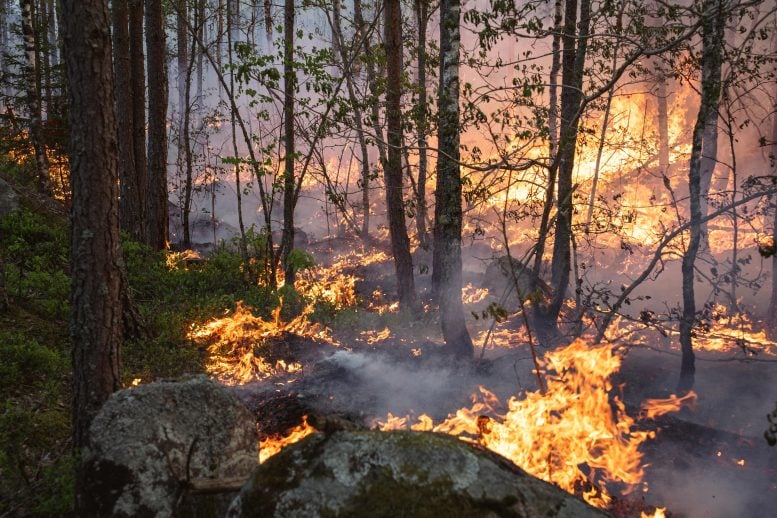
Arctic Wildfires Could Be Unleashing Massive Amounts of Ancient Carbon — And Climate Models Are Missing It
A new wave of research is raising alarm bells over the true impact of wildfires in the Arctic and boreal regions. Scientists from the University of California, Berkeley, have uncovered evidence suggesting that wildfires sweeping through Alaska, Canada, Scandinavia, and Russia may be releasing far more carbon into the atmosphere than previously estimated — and much of it comes from deep, ancient carbon stores that have been locked away for centuries.
For years, climate models have underestimated the carbon footprint of these northern blazes. The problem lies in what’s burning. While earlier assessments mainly focused on trees and surface vegetation, the latest findings reveal that many fires are now penetrating deep into the soil, igniting carbon-rich peat and organic matter that has accumulated over millennia. This “legacy carbon” — carbon that has been stored for hundreds or even thousands of years — is being released back into the atmosphere at an alarming rate.
The Arctic is warming at roughly four times the global average, making it a hotspot for climate-driven changes. Longer, hotter summers have extended the fire season, while thawing permafrost is making ancient carbon stocks more vulnerable to combustion. In some cases, fires are burning so intensely that they create their own weather systems, spreading rapidly and unpredictably across vast, remote landscapes.
What makes this especially concerning is the feedback loop it creates. As more carbon is released, global temperatures rise, which in turn makes Arctic fires more frequent and severe. This self-reinforcing cycle could dramatically accelerate climate change, pushing us closer to critical tipping points that are difficult, if not impossible, to reverse.
The research team used satellite data, ground measurements, and advanced modeling to analyze fire patterns and carbon emissions across the boreal biome. Their findings suggest that current climate models may be underestimating Arctic wildfire emissions by as much as 50%. This gap in understanding could have significant implications for global carbon budgets and climate policy.
One of the most striking revelations is the role of peat fires. Unlike typical forest fires, peat fires can smolder underground for months, slowly releasing carbon without producing dramatic smoke plumes. These “zombie fires” are notoriously difficult to detect and extinguish, making them a hidden but potent source of emissions.
The study also highlights the need for improved monitoring systems in the Arctic. Many of these fires occur in remote areas with limited access, making it challenging to gather accurate data. Enhanced satellite technology, drone surveillance, and on-the-ground sensors could help close this knowledge gap and provide a clearer picture of the true scale of the problem.
Policy makers are now being urged to factor these findings into future climate strategies. Protecting Arctic and boreal ecosystems, improving fire management practices, and investing in carbon monitoring infrastructure are seen as critical steps. Some experts are also calling for greater international cooperation, as the impacts of these fires extend far beyond national borders.
The implications of this research are profound. If Arctic wildfires continue to release carbon at the current or accelerated rate, it could undermine global efforts to limit warming to 1.5°C above pre-industrial levels — a key target set by the Paris Agreement. In essence, the very regions that have long acted as carbon sinks may be transforming into major carbon sources.
As the planet continues to warm, the urgency to understand and mitigate these hidden emissions has never been greater. The Arctic, once considered a remote and stable region, is now at the frontlines of the climate crisis — and what happens there will have consequences felt around the world.
Tags / Viral Phrases:
Arctic wildfires, boreal forests, carbon emissions, ancient carbon, legacy carbon, peat fires, zombie fires, climate feedback loop, permafrost thaw, carbon budget, UC Berkeley research, Arctic warming, global climate models, Paris Agreement, tipping points, carbon monitoring, remote sensing, drone surveillance, international cooperation, climate crisis, carbon sinks, fire management, satellite data, ground measurements, Arctic ecosystems, climate policy, carbon release, hidden emissions, self-reinforcing cycle, carbon stocks, Arctic carbon, boreal biome, fire season, Arctic blaze, carbon footprint, climate-driven changes, carbon-rich peat, underground smoldering, Arctic blaze, carbon cycle, global warming, carbon accounting, Arctic blaze, carbon accounting, carbon accounting.
,


Leave a Reply
Want to join the discussion?Feel free to contribute!