
Will war in the Middle East accelerate the clean energy transition?
Here’s a rewritten version of the news article with a more viral, tech-focused tone:
# Iran’s Strait of Hormuz Crisis: The Unexpected Catalyst for the Green Energy Revolution
In a stunning geopolitical twist, Donald Trump’s hawkish stance on Iran has inadvertently supercharged the global renewable energy movement. The “drill, baby, drill” president’s aggressive posturing has triggered a chain reaction that’s sending shockwaves through the fossil fuel industry and accelerating the world’s transition to clean energy.
## The Strait of Hormuz: An Energy Chokepoint Under Siege
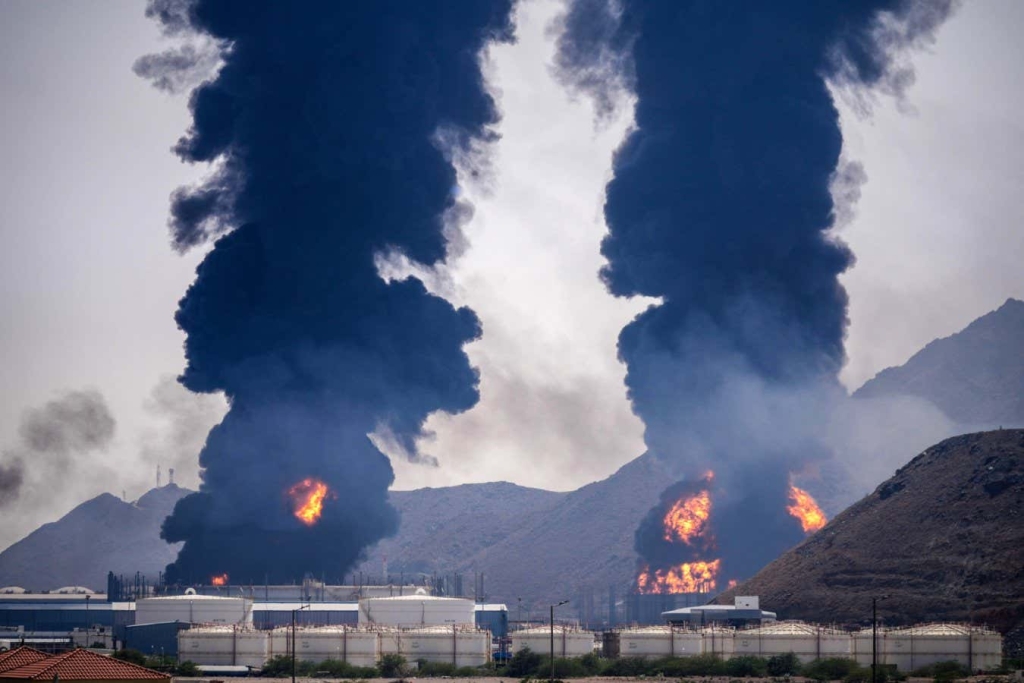
The Strait of Hormuz, a critical waterway through which one-fifth of global oil and one-fifth of seaborne gas supplies pass, has become the epicenter of an energy crisis. Iran’s retaliatory actions – halting almost all traffic and launching drone and missile strikes on oil and gas fields – have sent crude oil prices soaring from $70 to over $100 a barrel. Natural gas prices have also skyrocketed across most regions.
While Arab countries scramble to reroute fuel through pipelines, experts predict that prices will remain elevated. Even if oil prices stabilize at an average of $85 for the year, fossil-fuel importing countries face an additional $240 billion in costs, according to the think tank Ember.
## The Silver Lining: A Green Energy Boom
But here’s where it gets interesting. Ember’s analysis suggests that maximizing the deployment of renewable energy, electric vehicles, and heat pumps could slash these costs by a staggering 70%. Sam Butler-Sloss of Ember puts it bluntly: “The conflict in Iran almost certainly is going to be an accelerant on the energy transition.”
As Butler-Sloss explains, “As prices go up, as the awareness of the fragility of the fossil system rises, so it becomes ever clearer that nations need to find more secure energy forms, and… everywhere in the world is in a location that receives plentiful solar and wind.”
## Asia: The New Front Line in the Energy Transition
The impacts of this energy crunch will be even more widespread than when Russia’s 2022 invasion of Ukraine disrupted European energy supplies. Asia, which receives four-fifths of the oil and liquefied natural gas (LNG) shipped through the Strait of Hormuz, is now bearing the brunt of the crisis.
Countries like Japan, South Korea, and Taiwan, which rely heavily on the strait for their oil and gas imports, are feeling the pinch. In India, some restaurants have even had to restrict menu options due to cooking gas shortages. “This is Asia’s Ukraine moment,” says Butler-Sloss.
## The Short-Term Pain, Long-Term Gain
In the immediate term, greenhouse gas emissions may actually rise as countries like Japan and South Korea ramp up coal power generation. However, this is likely to be a temporary blip in the long-term trend towards cleaner energy.
South Korea has promised to fast-track wind and solar projects, while India’s Prime Minister Narendra Modi has emphasized the role of solar and electric vehicles in reducing the country’s dependence on foreign fuel imports. “Economies in Asia are getting a wake-up call, just as Europe got its wake-up call four years ago,” says Pavel Molchanov of Raymond James & Associates.
## China: The Renewable Energy Juggernaut
China, already the world’s largest installer of solar and wind power, is expected to accelerate its renewable energy push. With almost half of its crude oil imports passing through the Strait of Hormuz, the country has a strong incentive to reduce its reliance on fossil fuels.
However, China is also likely to increase its coal usage in the short term, given its status as the world’s largest coal producer. “China will follow its long-standing all-of-the-above energy strategy,” says Li Shuo of the Asia Society Policy Institute.
## The Global Ripple Effect
The crisis is having unexpected consequences worldwide. In countries with poor electricity grids, the rising cost of natural gas and diesel is making solar power increasingly attractive for both utility companies and individual households.
Pakistan offers a striking example: after the Ukraine invasion priced the country out of the LNG market, solar power’s share of electricity production jumped from 4% to 25%, largely thanks to cheap Chinese solar panels.
## The Electric Vehicle Revolution Accelerates
In the long term, the biggest winner may be electric vehicles (EVs). While natural gas prices may stabilize sooner due to pipeline deliveries, oil prices are likely to remain volatile given the global nature of the market.
With car owners facing eye-watering prices at the pump even in the US – the world’s top oil producer – more consumers are considering EVs. Governments are being urged to encourage EV adoption, as it could potentially reduce the bills of fossil-fuel importing countries by a third, according to Ember.
## The Bottom Line: A Tipping Point for Clean Energy
As Michael Liebreich, an energy consultant at Liebreich Associates, puts it: “The assumption of a growing demand for gas in a world that has got cheap wind, solar and batteries and is increasingly averse to being dependent on global commodity markets, that narrative is wrong. It’s over.”
The crisis in the Strait of Hormuz may well be remembered as the moment when the world decisively turned its back on fossil fuels and embraced a cleaner, more sustainable energy future.
—
# Tags: #EnergyCrisis #RenewableRevolution #GreenEnergyBoom #StraitOfHormuz #ClimateAction #ElectricVehicles #SolarPower #WindEnergy #EnergyIndependence #FossilFuelCrisis #CleanEnergyFuture #SustainableTechnology #GeopoliticalEnergy #AsiaEnergyCrisis #ChinaRenewables #EVAdoption #EnergyTransition #ClimateChange #SustainableDevelopment #GlobalEnergyMarket
# Viral Phrases: “Drill, baby, drill” backfires spectacularly, Asia’s Ukraine moment, The unexpected catalyst for green energy, Fossil fuels face their final countdown, Renewable energy: The 70% solution, Electric vehicles: The super-lever of energy independence, Coal’s temporary comeback, Solar power’s surprising surge in Pakistan, China’s all-of-the-above strategy, The tipping point for clean energy, Fossil fuel fragility exposed, Energy security in the age of renewables, The end of the growing gas demand narrative, From crisis to clean energy opportunity, The Strait of Hormuz: Energy chokepoint under siege,


Leave a Reply
Want to join the discussion?Feel free to contribute!