
Wizards of the Coast Is Officially Calling It ‘Dungeons & Dragons’ 5.5E, Would Like You to Not Read Anything Into That
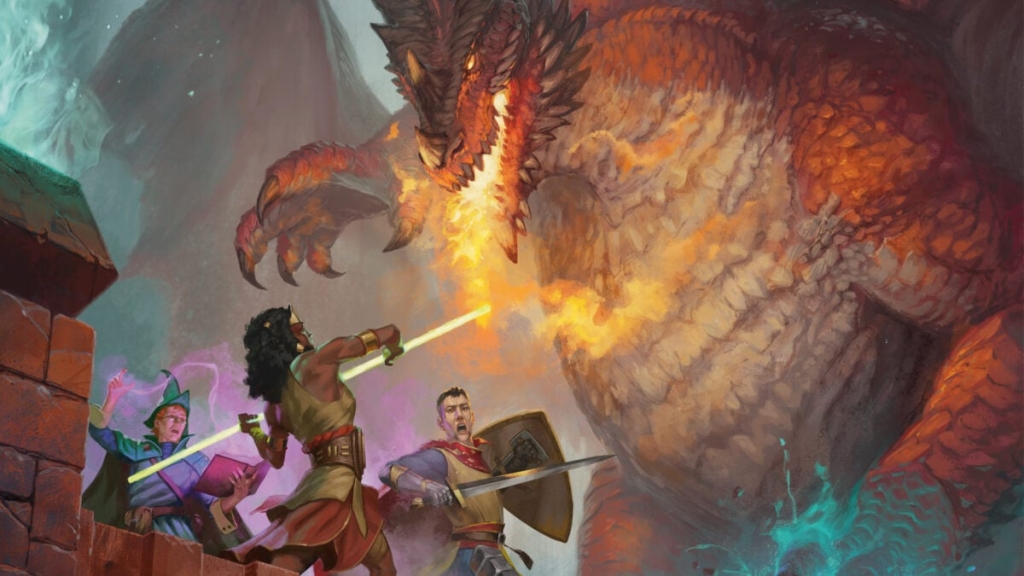
Dungeons & Dragons Officially Embraces “5.5e” Label After Years of Community Use
In a surprising turn of events that’s sending shockwaves through the tabletop gaming community, Wizards of the Coast has officially acknowledged what players have been calling it for years: the latest D&D ruleset is indeed “5.5e.”
When Wizards first announced what was then called “One D&D” back in 2020, the company was adamant that this wasn’t a new edition. Instead, they positioned it as an evolution of fifth edition, maintaining compatibility with existing books while introducing updated core rulebooks for the game’s 50th anniversary in 2024. The publisher insisted on calling it everything except what it clearly was—until now.
In a changelog update to D&D Beyond (via Polygon), Wizards has officially adopted the “5.5e” terminology for internal classification purposes. The change appears primarily on the D&D Beyond platform, where players can now clearly distinguish between original fifth edition content and the updated 2024 rules.
“We’re making this change because we recognize that there’s confusion when just referring to the year, especially when browsing your library and building a character,” the update explains. The company also clarified that this is purely a labeling change with no impact on gameplay mechanics or purchased content.
This admission represents a significant pivot for Wizards of the Coast, which had previously resisted the 5.5e designation despite overwhelming community adoption. Players had been using the term since the initial announcement, recognizing the substantial mechanical updates and quality-of-life improvements that warranted the half-edition bump.
The decision makes practical sense, especially for D&D Beyond users who can toggle between different rule sets. Previously, the platform displayed a confusing mix of “2014” and “2024” labels, making it difficult for players to quickly identify which version of a rule they were viewing. The 5.5e designation provides clarity while acknowledging the edition’s evolutionary nature.
This isn’t unprecedented in D&D’s history. The game’s second edition, Advanced Dungeons & Dragons, received its own 2.5 update before third edition dropped the “Advanced” designation entirely. Third edition itself got a 3.5 revision three years after launch, making 5.5e part of a long tradition of incremental improvements.
The timing is particularly interesting given D&D Beyond’s rocky history with edition changes. When Wizards initially attempted to force players to manually homebrew 2014 rules on the platform, the backlash was so severe that the company reversed course within weeks. This latest change represents a more collaborative approach to edition management.
For the broader D&D community, this acknowledgment validates years of player perception and terminology. It’s a rare moment where corporate acknowledgment aligns perfectly with grassroots naming conventions, suggesting Wizards may be learning to better listen to its passionate player base.
The move also raises questions about future edition naming conventions and how Wizards will handle subsequent updates. Will we see a 6th edition someday, or will the company continue with this more incremental approach to rule evolution?
As D&D continues to dominate the tabletop RPG market, with record-breaking sales and an expanding player base, how Wizards manages edition transitions and communicates changes will remain crucial to maintaining community trust and engagement.
Tags and Viral Phrases:
5.5e confirmed, D&D edition naming drama, Wizards finally admits it, tabletop RPG evolution, D&D Beyond update, edition wars settled, 2024 rules officially 5.5e, D&D community wins, incremental edition changes, D&D ruleset clarification, Wizards of the Coast backs down, tabletop gaming terminology, D&D edition history, 5e to 5.5e transition, D&D rules compatibility, edition naming conventions, D&D player terminology, tabletop RPG publishing, D&D anniversary edition, game mechanics evolution
,


Leave a Reply
Want to join the discussion?Feel free to contribute!