
Woman Sues Tesla After Cybertruck Tries to Drive Her Off Bridge
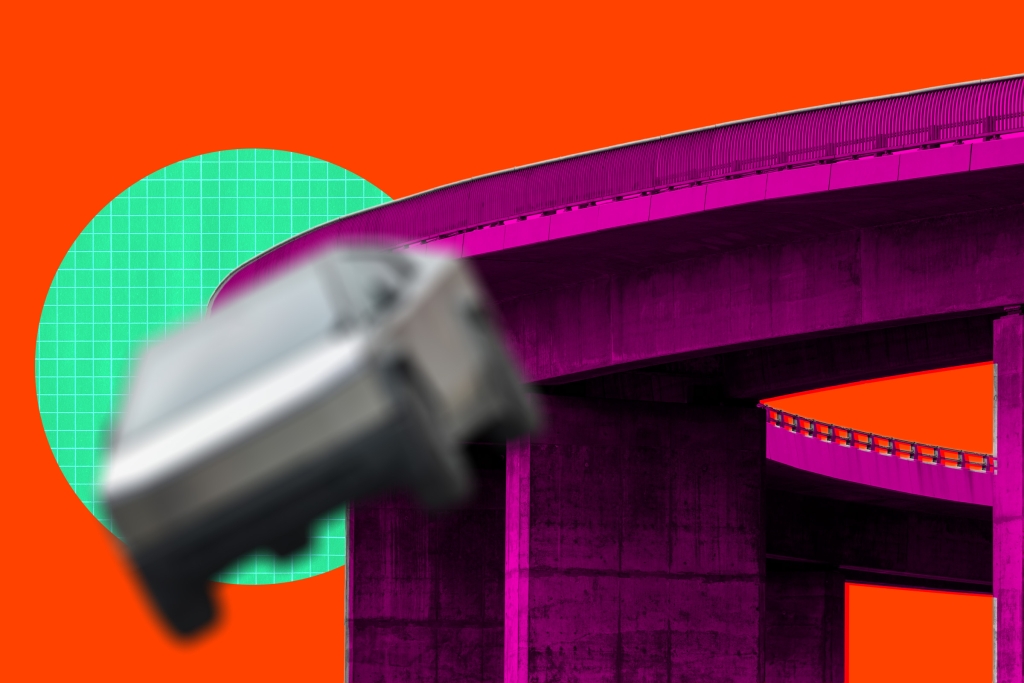
Woman Sues Tesla After Cybertruck’s “Full Self-Driving” Feature Nearly Sends Her Off Bridge in Terrifying Incident
Houston Woman Files Lawsuit Against Tesla Following Near-Fatal Crash Involving Autonomous Vehicle
In a shocking incident that has reignited debates about autonomous vehicle safety, a Houston woman is suing Tesla after her Cybertruck allegedly attempted to drive her off the side of a bridge while operating in the controversial “Full Self-Driving” (FSD) mode.
Justine Saint Amour, the Cybertruck owner, filed the lawsuit after experiencing what she describes as a near-death experience on a Houston overpass last August. The incident, which has now become a focal point in the ongoing controversy surrounding Tesla’s autonomous driving claims, involved the vehicle suddenly accelerating toward a concrete barrier and nearly sending her plummeting off the elevated roadway.
The Terrifying Incident
According to court documents, Saint Amour was traveling on the Eastex Freeway when her Cybertruck, running Tesla’s FSD feature, “suddenly and without warning” accelerated up the overpass ramp at an unsafe speed. As the vehicle approached a critical Y-shaped interchange, it failed to navigate the curve properly.
Dashcam footage obtained by investigators and later released to the public shows the Cybertruck barreling through traffic cones that separated the lanes before violently slamming into a concrete sidewall. The impact was so severe that pieces of the vehicle’s distinctive stainless steel hood were torn off and scattered across the roadway as the truck spun out of control.
“The Cybertruck attempted to drive straight ahead into the concrete barrier and the freeway below,” the lawsuit claims, describing how the vehicle completely failed to follow the intended path of the road.
Saint Amour reported that she attempted to disengage the FSD system and take manual control as she realized the vehicle was accelerating dangerously, but she had insufficient time to react before the collision occurred. The crash resulted in “substantial” injuries, including two herniated discs in her lower back, another herniated disc in her neck, sprained tendons in her wrist, and ongoing numbness and weakness in her right hand.
A Pattern of Dangerous Failures
This incident is far from isolated and represents the latest in a disturbing pattern of accidents involving Tesla’s autonomous driving systems. The technology, which Tesla CEO Elon Musk has repeatedly claimed is capable of full self-driving despite overwhelming evidence to the contrary, has been involved in numerous crashes, some of which have proven fatal.
In a particularly devastating case, Tesla was found partially responsible for the death of a 22-year-old woman who was struck by a Tesla operating on Autopilot, FSD’s predecessor system. A judge subsequently ordered Tesla to pay $243 million to the victim’s family, highlighting the serious legal and financial consequences of the technology’s failures.
The National Highway Traffic Safety Administration (NHTSA) launched a formal investigation into Tesla last year following another fatal incident where a Tesla operating in FSD mode struck and killed an elderly pedestrian. Disturbingly, dashcam footage from that incident revealed that the vehicle’s front camera had been blinded by sunlight moments before the collision, raising serious questions about the reliability of Tesla’s vision-only approach to autonomous driving.
The Vision-Only Controversy
At the heart of these recurring failures lies Elon Musk’s controversial decision to rely exclusively on cameras for Tesla’s autonomous driving system, rejecting the use of additional sensors like lidar that competitors such as Waymo and Cruise have embraced. Musk has repeatedly dismissed lidar as an expensive “crutch,” insisting that a vision-only approach is sufficient for full self-driving capability.
However, the lawsuit filed by Saint Amour directly challenges this philosophy, stating: “While engineers at Tesla recommended the super-human vision of LiDAR be included for self-driving vehicles, and competitors like Waymo and Cruise relied heavily on LiDAR, Musk chose instead to rely only upon cheap video cameras.”
This approach has drawn intense criticism from industry experts and safety advocates who argue that the redundancy provided by multiple sensing technologies is essential for safe autonomous operation, particularly in challenging conditions like direct sunlight, fog, or darkness.
False Advertising Allegations
The lawsuit also levels serious accusations of false advertising against Tesla, arguing that the company has deliberately misled consumers about the capabilities of its FSD system. Despite the name “Full Self-Driving,” the technology requires constant human supervision and intervention, contradicting the implication that the vehicle can operate independently.
Tesla has faced mounting criticism for this misleading branding. The California Department of Motor Vehicles (DMV) sued the company for false advertising based on the FSD nomenclature, prompting Tesla to make a subtle but significant modification to the system’s name last year, changing it to “Full Self-Driving (Supervised)” in an apparent attempt to clarify the technology’s limitations.
However, critics argue that this minor rebranding does little to address the fundamental issue of Tesla overstating the system’s capabilities. Elon Musk himself continues to make bold claims about the technology’s readiness, frequently suggesting that full autonomy is just around the corner, despite the technology’s repeated failures in real-world conditions.
Legal and Industry Implications
The lawsuit represents a significant challenge to Tesla’s autonomous driving program and could have far-reaching implications for the entire self-driving industry. Saint Amour’s attorney, Bob Hilliard, minced no words in his assessment of the situation, telling Chron: “This company wants drivers to believe and trust their life on a lie: that the vehicle can self-drive and that it can do so safely. It can’t, and it doesn’t.”
The case also highlights the growing tension between Tesla and regulatory authorities. In a move that underscores the company’s aggressive defense of its autonomous driving technology, Tesla has filed a countersuit against California’s DMV in response to the false advertising allegations, demonstrating the high stakes involved in this legal battle.
Industry analysts note that this lawsuit could serve as a watershed moment for autonomous vehicle regulation, potentially forcing greater transparency about the limitations of current self-driving technology and establishing clearer standards for what constitutes “full self-driving” capability.
The Human Cost
Beyond the legal and technical aspects, this case starkly illustrates the very real human consequences of pushing autonomous technology to market before it’s truly ready. Saint Amour’s injuries, which include chronic pain, reduced mobility, and ongoing neurological symptoms, represent the physical toll of a technology that has been marketed as revolutionary but has proven to be unreliable and potentially dangerous.
The psychological impact cannot be understated either. Victims of these crashes often experience trauma, anxiety about using autonomous features, and a profound loss of trust in the technology that was supposed to make driving safer and more convenient.
Looking Forward
As this lawsuit moves through the legal system, it will likely prompt renewed scrutiny of Tesla’s autonomous driving claims and could influence how other companies approach the development and marketing of self-driving technology. The case may also accelerate calls for more stringent regulation of autonomous vehicles, including mandatory testing standards, clearer labeling requirements, and stronger oversight of marketing claims.
For Tesla, the stakes are particularly high. The company’s valuation and future growth prospects have been closely tied to the success of its autonomous driving ambitions, making this lawsuit not just a legal challenge but a potential threat to its core business strategy.
The outcome of this case could determine whether the promise of autonomous vehicles becomes a reality based on genuine safety and capability, or whether it remains mired in controversy, litigation, and preventable tragedies.
Expert Analysis
Automotive safety experts emphasize that while the goal of autonomous vehicles remains worthy, the current state of the technology falls far short of what’s being promised to consumers. “What we’re seeing with these Tesla incidents isn’t a failure of ambition,” notes one industry analyst, “but rather a failure of honesty about what the technology can actually do today.”
The contrast with companies like Waymo, which have taken a more cautious and incremental approach to autonomous deployment, is particularly striking. Waymo’s vehicles, which do operate without human drivers in limited areas, have not experienced the same pattern of dangerous failures, suggesting that the vision-only approach championed by Tesla may indeed be fundamentally flawed.
Conclusion
The lawsuit filed by Justine Saint Amour represents far more than an individual legal case; it embodies the growing frustration and concern among consumers, regulators, and industry experts about the gap between Tesla’s autonomous driving promises and the reality of its technology’s performance. As this case proceeds, it will likely serve as a crucial test of whether companies can be held accountable for overpromising on autonomous capabilities, and whether the rush to market with incomplete technology will finally give way to a more responsible and safety-focused approach to self-driving development.
The incident serves as a sobering reminder that behind every headline about autonomous vehicle technology are real people whose lives can be dramatically and permanently affected when that technology fails. As the legal proceedings unfold, the broader question remains: how many more incidents like this will it take before the autonomous driving industry aligns its marketing with reality, and prioritizes safety over hype?
Tags & Viral Elements:
- Tesla Cybertruck bridge crash
- Full Self-Driving failure
- Elon Musk autonomous driving controversy
- Tesla lawsuit autonomous vehicles
- Woman nearly dies Tesla FSD
- Cybertruck tries to drive off bridge
- Tesla false advertising autonomous driving
- NHTSA Tesla investigation
- Vision-only self-driving problems
- Waymo vs Tesla autonomous driving
- Tesla counter-sues California DMV
- Autonomous vehicle safety concerns
- Tesla FSD (Supervised) rebranding
- LiDAR vs camera debate
- Self-driving technology failures
- Tesla autonomous driving deaths
- Houston Cybertruck accident
- Tesla misleading marketing
- Autonomous vehicle regulation
- Bob Hilliard Tesla lawsuit
- Justine Saint Amour Cybertruck
- Tesla FSD deadly incidents
- Autonomous vehicle litigation
- Tesla autonomous driving risks
- Cybertruck stainless steel damage
- Tesla autonomous driving investigation
- Self-driving technology hype vs reality
- Tesla autonomous driving false promises
- Bridge crash Tesla FSD
- Tesla autonomous driving failures
- NHTSA Tesla probe
- Tesla autonomous driving controversy
- Vision-only approach problems
- Tesla autonomous driving deaths
- Cybertruck autonomous driving accident
- Tesla FSD misleading name
- Autonomous vehicle safety standards
- Tesla autonomous driving lawsuits
- Tesla autonomous driving technology
- Self-driving car failures
- Tesla autonomous driving risks
- Tesla FSD deadly accidents
- Autonomous vehicle regulation needed
- Tesla autonomous driving investigation
- Tesla autonomous driving problems
- Self-driving car technology failures
- Tesla autonomous driving safety
- Tesla autonomous driving deaths
- Tesla autonomous driving controversy
- Tesla autonomous driving failures
- Tesla autonomous driving risks
- Tesla autonomous driving lawsuits
- Tesla autonomous driving investigation
- Tesla autonomous driving problems
- Tesla autonomous driving safety
- Tesla autonomous driving deaths
- Tesla autonomous driving controversy
- Tesla autonomous driving failures
- Tesla autonomous driving risks
- Tesla autonomous driving lawsuits
- Tesla autonomous driving investigation
- Tesla autonomous driving problems
- Tesla autonomous driving safety
- Tesla autonomous driving deaths
- Tesla autonomous driving controversy
- Tesla autonomous driving failures
- Tesla autonomous driving risks
- Tesla autonomous driving lawsuits
- Tesla autonomous driving investigation
- Tesla autonomous driving problems
- Tesla autonomous driving safety
- Tesla autonomous driving deaths
- Tesla autonomous driving controversy
- Tesla autonomous driving failures
- Tesla autonomous driving risks
- Tesla autonomous driving lawsuits
- Tesla autonomous driving investigation
- Tesla autonomous driving problems
- Tesla autonomous driving safety
- Tesla autonomous driving deaths
- Tesla autonomous driving controversy
- Tesla autonomous driving failures
- Tesla autonomous driving risks
- Tesla autonomous driving lawsuits
- Tesla autonomous driving investigation
- Tesla autonomous driving problems
- Tesla autonomous driving safety
,
Leave a Reply
Want to join the discussion?Feel free to contribute!