
World is entering an era of ‘water bankruptcy’
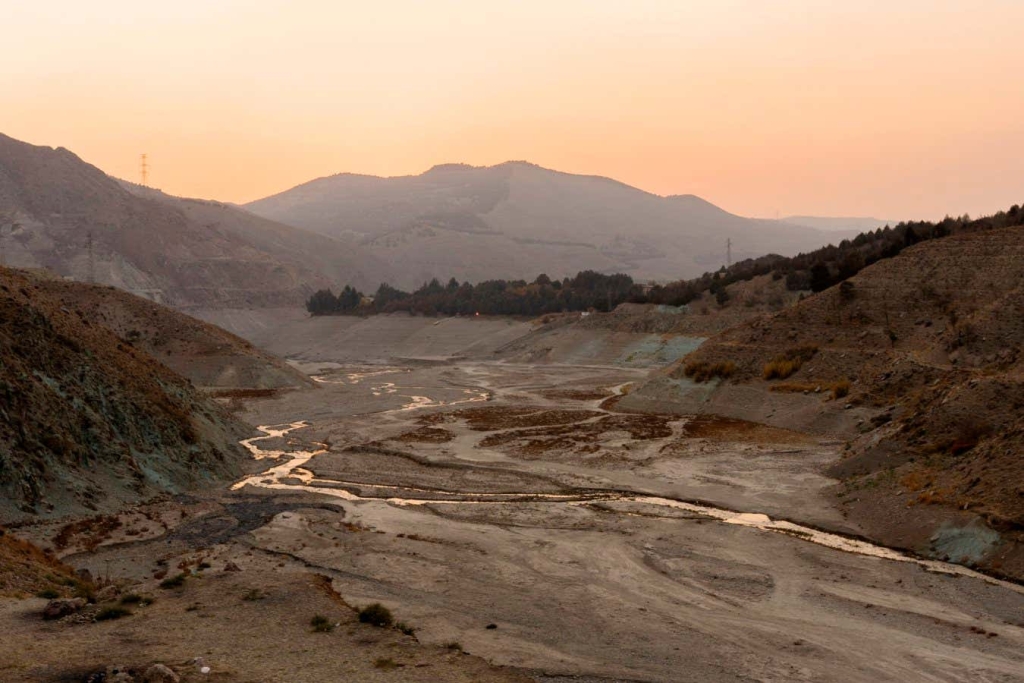
Earth’s Water Crisis: The Global “Bankruptcy” No One Saw Coming
The world stands at a critical juncture as humanity faces what experts are calling an “era of water bankruptcy” – a crisis that threatens billions of lives and could reshape the global order. According to a groundbreaking United Nations report, 75% of the global population now lives in countries grappling with water scarcity, contamination, or drought conditions.
The report’s stark conclusion reveals a planet that has been living beyond its hydrological means for decades. We’re essentially withdrawing from our planet’s water savings account – groundwater reserves that took millennia to accumulate – at an unsustainable rate. The numbers are sobering: 70% of major aquifers worldwide are in decline, and many of these changes may be irreversible.
Kaveh Madani, the report’s author and director at the UN University Institute for Water, Environment and Health, paints a vivid picture of our predicament. “Our checking account, the surface water… is now empty,” he explains. “The savings account that we inherited from our ancestors, the groundwater, glaciers and so on… they’re also drained now. We are seeing symptoms around the world… of water bankruptcy.”
The crisis manifests in dramatic and sometimes deadly ways across the globe. In Turkey, excessive groundwater pumping has created a nightmare scenario with nearly 700 sinkholes appearing across farmland. Beijing has experienced deadly dust storms fueled by desertification, claiming hundreds of lives. In Iran, the situation has become so dire that the government has considered evacuating Tehran and is now attempting to induce rainfall through controversial cloud-seeding operations.
Iran’s plight serves as a stark warning of what happens when water scarcity meets political instability. The country recently experienced its driest autumn in 50 years, while Lake Urmia – once the largest lake in the Middle East – has nearly vanished due to a combination of dams, wells, and agricultural demands. These water shortages contributed to bloody protests, though currency collapse was the immediate trigger.
The crisis isn’t confined to traditionally arid regions. The United States faces its own water emergency with the Colorado River, which supplies water to much of the American West. Over the past two decades, the river’s flow has decreased by an estimated 20%, primarily due to lower precipitation and increased evaporation from climate change. However, human consumption patterns exacerbate the problem, with significant portions of the river’s water diverted to grow feed for beef and dairy cattle, even as cities like Los Angeles depend on it for drinking water.
The Colorado’s two major reservoirs now sit at roughly 30% capacity, with projections suggesting they could reach “dead pool” levels – where water is too low to flow downstream – as early as 2027. Bradley Udall of Colorado State University notes that negotiations over water allocation between states have broken down, highlighting the political complexity of addressing this crisis.
Agricultural efficiency improvements, while important, aren’t a silver bullet. Paradoxically, more efficient irrigation methods like drip or sprinkler systems can actually increase overall water consumption because they allow water to be gradually absorbed by plants rather than flowing back into rivers. The solution, according to Udall, must primarily come from agriculture, which accounts for 70% of global water use.
The economic implications are staggering. Half of all food production now occurs in areas with declining water storage. Yet reducing agriculture’s water footprint requires careful consideration, as over a billion people worldwide depend on farming for their livelihoods. Most of these individuals live in lower-income countries that often export food to wealthier nations’ service economies.
Even regions with historically abundant rainfall face new challenges. Data centers consume increasing amounts of water for cooling, while industrial pollution, sewage, fertilizers, and manure contaminate water supplies. The world has lost wetlands equivalent to the entire area of the European Union – mostly converted to agriculture – resulting in an estimated $5.1 trillion loss in ecosystem services including flood protection, food production, and carbon storage.
In Bangladesh, half the country’s well water is contaminated with arsenic due to sea level rise and saltwater intrusion. Meanwhile, Dhaka’s tap water and rivers have been poisoned by chemicals from fast fashion production, primarily serving markets in Europe and North America. “Every person knows that the rivers are being polluted because of the garment industry,” says Sonia Hoque of the University of Oxford. “But they know that stringent regulation, if applied, would… scare away the buyers.”
Perhaps most concerning is that many of these changes are permanent. Glaciers that have sustained water supplies for hundreds of millions of people have melted, and rivers, lakes, wetlands, and aquifers may never return to their previous states.
The path forward requires humanity to fundamentally reimagine its relationship with water. Madani emphasizes that better water management is possible, but it starts with basic accountability. Most countries need to begin by simply measuring their water sources and consumption – starting with installing water meters in homes, wells, and diversion canals.
“You’re thinking about launching a [cloud-seeding] rocket to get water, but you don’t even know how much water you have in your system,” Madani points out. “We cannot manage what we do not measure.”
The water crisis represents one of the defining challenges of our time – a global emergency that transcends borders and demands coordinated action. As populations grow and climate change intensifies, the era of water bankruptcy will test humanity’s ability to adapt, innovate, and cooperate in ways never before required.
Tags: water crisis, global water shortage, climate change, water scarcity, groundwater depletion, water bankruptcy, Colorado River, Lake Urmia, cloud seeding, agricultural water use, water pollution, wetlands loss, Bangladesh water crisis, Iran water protests, data center water consumption, glacier melt, water meters, ecosystem services, water management, sustainable water use
Viral phrases: “era of water bankruptcy,” “our checking account is empty,” “draining our ancestors’ savings,” “700 sinkholes in Turkey,” “dead pool levels by 2027,” “half of all food production at risk,” “water puts people in jobs,” “you can’t manage what you don’t measure,” “the rivers are being poisoned for fast fashion,” “half of Bangladesh’s well water contaminated,” “cloud-seeding rockets while we don’t know our water inventory”,

Leave a Reply
Want to join the discussion?Feel free to contribute!