
World’s oldest cold virus found in 18th-century woman’s lungs
Scientists Uncover 250-Year-Old Cold Virus, Rewriting the History of Human Disease
In a groundbreaking discovery that bridges centuries of medical history, researchers have successfully identified a cold virus that infected a woman in London approximately 250 years ago, making it the oldest confirmed human RNA virus ever discovered. This remarkable achievement not only pushes the boundaries of what’s possible in ancient pathogen research but also opens up entirely new avenues for understanding how viruses have evolved alongside humanity throughout history.
The Challenge of Ancient RNA
For decades, scientists have been able to extract and sequence DNA from ancient specimens, with some viral DNA traces found in Neanderthal bones dating back an astonishing 50,000 years. However, RNA—the genetic material used by many viruses including those responsible for the common cold—has proven far more elusive due to its inherent instability. Unlike DNA, which can remain relatively intact for millennia under the right conditions, RNA typically degrades completely within hours after death.
The fundamental difference lies in RNA’s molecular structure. While DNA forms a stable double helix, RNA exists as a single strand that’s far more vulnerable to enzymatic degradation and environmental factors. This fragility has made the recovery of ancient RNA seem nearly impossible, limiting our understanding of historical viral infections to what could be inferred from skeletal remains or written medical records.
A Technological Breakthrough
The research team, led by Erin Barnett at the Fred Hutchinson Cancer Center in Seattle, Washington, achieved what many considered impossible by employing cutting-edge sequencing techniques and a stroke of historical luck. Their success represents a paradigm shift in paleovirology—the study of ancient viruses.
“What makes this discovery particularly exciting is that we’ve demonstrated the possibility of recovering RNA from wet collections that pre-date the use of formalin,” Barnett explains. “Until now, most ancient RNA studies have relied on exceptionally well-preserved materials, such as permafrost samples or desiccated seeds, which greatly limits what we can learn about past human disease.”
The Historical Specimens
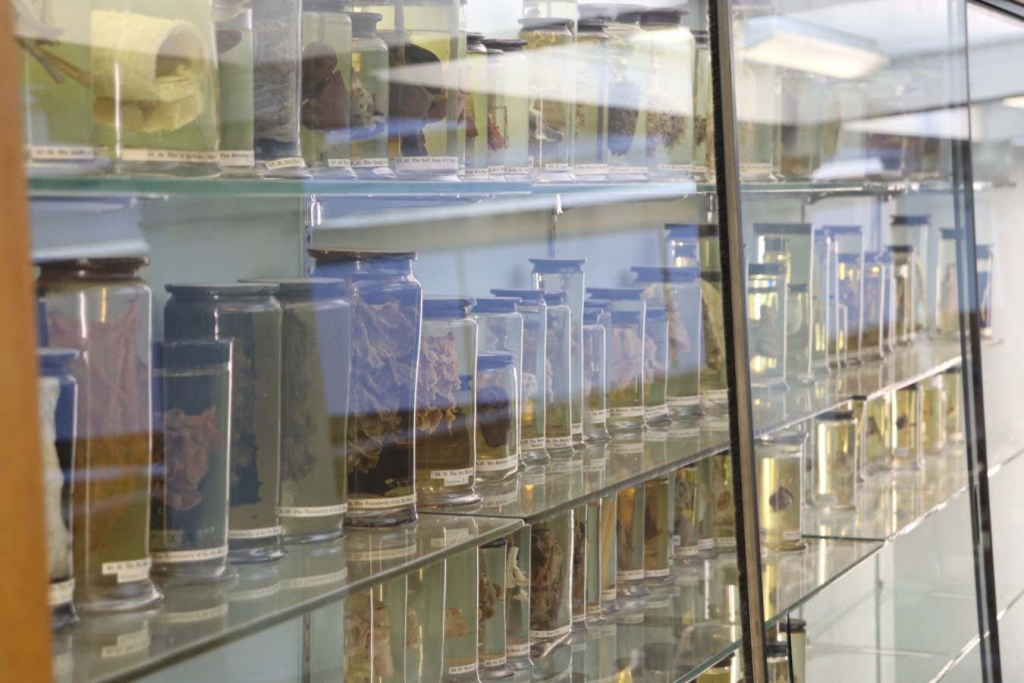
The key to this discovery lay in an unexpected source: the Hunterian Anatomy Museum at the University of Glasgow, UK. Among its collections, the researchers found lung tissue samples from two individuals that had been preserved in alcohol rather than the more common formalin solution used in later centuries.
The first specimen came from a woman who lived in London and died around the 1770s. The second was from an individual of unknown sex who died in 1877. Both had documented evidence of severe respiratory disease, making them prime candidates for investigation.
The Technical Challenge
Extracting usable genetic material from specimens this old presented enormous technical challenges. The RNA recovered from both lung samples was described as “extremely fragmented,” with most pieces averaging only about 20 to 30 nucleotides in length. To put this in perspective, Barnett notes that “RNA molecules in living cells are usually more than 1000 nucleotides long. So instead of working with long, intact strands, we were piecing together information from many tiny fragments.”
This fragmentation meant the researchers had to employ sophisticated computational methods to reconstruct the viral genome, essentially solving a massive biological puzzle where most of the pieces were missing or damaged. The process required not only advanced sequencing technology but also innovative bioinformatics approaches to piece together the fragmented genetic information.
The Viral Discovery
Through their painstaking analysis, the team successfully reconstructed the entire RNA genome of a rhinovirus from the 18th-century woman. Rhinoviruses are the primary cause of the common cold, responsible for more than half of all cold-like illnesses in humans.
But the viral discovery didn’t stop there. The researchers also found evidence that the woman was co-infected with several bacteria known to cause respiratory disease, including Streptococcus pneumoniae, Haemophilus influenzae, and Moraxella catarrhalis. This polymicrobial infection likely contributed to the severity of her illness.
Placing the Virus in Modern Context
To understand the significance of their discovery, the researchers compared the reconstructed ancient virus genome to a comprehensive database at the US National Institutes of Health containing millions of viral genomes, including numerous rhinoviruses collected from around the world.
This comparison revealed that the historical virus falls within the human rhinovirus A group and represents an extinct lineage most closely related to the modern genotype known as A19. By analyzing the genetic differences between the ancient and modern viruses, the team estimated that this historical virus and contemporary A19 last shared a common ancestor sometime in the 1600s.
“This timeline gives us a fascinating window into viral evolution,” Barnett notes. “We can now begin to understand how these viruses have changed over the past several centuries and what factors might have driven their evolution.”
Historical and Ethical Considerations
The researchers are acutely aware of the human stories behind their scientific discovery. “The stories of these two individuals are largely unknown, and we hope that this study serves to help recognise them,” Barnett says. The woman from 18th-century London and the individual from 1877 were real people who suffered from serious respiratory illnesses, and their preserved tissues have now contributed to scientific knowledge in ways they could never have imagined.
This discovery raises important questions about the ethical treatment of historical human remains and the balance between scientific advancement and respect for the deceased. The researchers approached their work with sensitivity, recognizing that they were handling the remains of individuals who lived and died centuries ago.
Implications for Modern Science
The significance of this discovery extends far beyond historical curiosity. Love Dalén, a researcher at Stockholm University in Sweden who was not involved in the study, emphasizes its transformative potential: “This represents a really important discovery since it demonstrates the possibility of recovering RNA from wet collections that pre-date the use of formalin. This is the first phase in what will become an explosion in the study of RNA viruses.”
Dalén points out that many RNA viruses evolve rapidly, meaning that studying them over timescales of several hundred years will yield crucial insights into virus evolution. This could have profound implications for our understanding of viral pathogenesis, transmission patterns, and the development of antiviral treatments.
The Future of Ancient RNA Research
This breakthrough opens up vast new possibilities for paleovirology. Pathology collections across Europe and North America contain thousands of specimens preserved in alcohol from the 18th and 19th centuries. Many of these specimens come from individuals who died from infectious diseases, potentially harboring viral genetic material that has remained hidden for centuries.
The techniques developed by Barnett and her colleagues could be applied to these collections, potentially revealing the genetic sequences of viruses that caused historical pandemics, influenced human evolution, or shaped the course of medical history. This could include viruses responsible for influenza outbreaks, measles epidemics, or other respiratory diseases that have plagued humanity throughout history.
Technical Innovation and Methodology
The success of this research represents a convergence of multiple scientific disciplines. It required expertise in molecular biology for the initial sample preparation, advanced sequencing technology to read the fragmented genetic material, computational biology to reconstruct the viral genome from incomplete data, and evolutionary biology to place the ancient virus in its proper phylogenetic context.
The computational challenges were particularly daunting. With RNA fragments averaging only 20-30 nucleotides compared to the typical 1000+ nucleotides in living cells, the researchers had to develop new algorithms capable of accurately reconstructing viral genomes from highly fragmented data. This represents a significant advancement in bioinformatics methodology that could have applications far beyond paleovirology.
The Broader Context of Viral Evolution
Understanding how viruses have evolved over centuries is crucial for predicting their future behavior. RNA viruses, in particular, are known for their high mutation rates, which allow them to rapidly adapt to new hosts, develop drug resistance, or evade immune responses. By studying ancient viral genomes, scientists can track these evolutionary changes over time scales that were previously inaccessible.
This historical perspective could prove invaluable for predicting future viral outbreaks, understanding the origins of viral pathogenicity, and developing more effective antiviral strategies. It also provides context for understanding how human immunity and viral virulence have co-evolved over centuries of interaction.
Recognition and Legacy
While the scientific achievement is significant, the researchers emphasize the human dimension of their work. The individuals whose tissues made this discovery possible lived in very different times, facing medical challenges that would be considered primitive by modern standards. Their preserved remains have now contributed to scientific knowledge in ways that transcend their own lifetimes.
This research serves as a reminder of the interconnectedness of human history and scientific progress. The woman who died of respiratory illness in 18th-century London could not have imagined that her preserved lung tissue would one day help scientists understand viral evolution. Similarly, the medical practitioners who preserved these specimens in the 1700s and 1800s could not have foreseen the technological advances that would make such analysis possible.
Conclusion
The identification of a 250-year-old cold virus represents more than just a scientific curiosity—it marks the beginning of a new era in our understanding of viral evolution and human disease history. By demonstrating that ancient RNA can be recovered from historical specimens, this research has opened up entirely new avenues for investigating the viruses that have shaped human health throughout history.
As technology continues to advance and more historical specimens are analyzed, we can expect to gain unprecedented insights into the evolutionary history of the viruses that continue to affect human health today. This discovery not only enriches our understanding of the past but also provides crucial tools for addressing future viral challenges.
The work of Barnett and her colleagues stands as a testament to scientific ingenuity and the enduring value of historical collections. It reminds us that the past is not truly past—it continues to inform and shape our understanding of the present and our preparation for the future.
Tags
ancient virus discovery, 250-year-old cold virus, rhinovirus evolution, RNA sequencing breakthrough, historical pathology collections, paleovirology advancement, viral genome reconstruction, 18th century London medical history, human rhinovirus A group, extinct viral lineage, medical museum specimens, ancient respiratory disease, viral evolution timeline, bioinformatics innovation, historical RNA recovery, common cold origins, virus mutation patterns, medical ethics in research, historical human remains, viral pathogenicity evolution
Viral Sentences
Scientists just found a cold virus from 250 years ago—and it’s rewriting everything we know about viral evolution!
This 18th-century woman’s preserved lung tissue just revealed the oldest human RNA virus ever discovered.
RNA is usually gone within hours after death—but these researchers found it after centuries!
The common cold has a secret history, and scientists just unlocked it using 250-year-old lung tissue.
This discovery proves that ancient viruses are still hiding in museum collections around the world.
From 18th-century London to modern labs—this virus’s journey spans centuries of scientific progress.
The oldest cold virus ever found was hiding in plain sight in a Glasgow museum collection.
Scientists pieced together a viral genome from fragments just 20-30 nucleotides long—like solving a puzzle with most pieces missing.
This breakthrough means we can now study how viruses evolved over hundreds of years, not just decades.
The woman who died in 1770s London never knew her tissue would help solve viral mysteries centuries later.
This isn’t just history—it’s a roadmap for understanding future viral outbreaks.
Museum collections just became time capsules for viral evolution, thanks to this groundbreaking research.
The common cold virus you catch today shares ancestry with one from the 1600s—how’s that for viral family history?
This discovery proves that sometimes the biggest scientific breakthroughs come from the most unexpected places.
The future of virus research isn’t just in labs—it’s in historical archives waiting to be rediscovered.
,


Leave a Reply
Want to join the discussion?Feel free to contribute!