
X updates paid partnerships policy banning gambling related promotions on platform
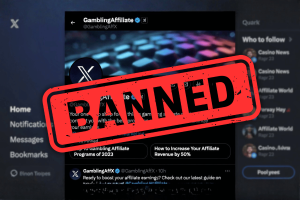
X Cracks Down on Gambling Promotions: Paid Partnerships Policy Gets a Major Overhaul
In a sweeping policy update that’s sending shockwaves through the creator economy and gambling industries alike, social media giant X (formerly Twitter) has dramatically tightened restrictions on how gambling-related content can be promoted through paid partnerships. The platform’s latest move signals a decisive shift in how it approaches controversial industries and their ability to leverage influencer marketing.
The New Rules: What’s Changed
X’s revised Paid Partnerships Policy, now prominently displayed in the company’s Help Center, explicitly prohibits gambling products and services from participating in paid partnership promotions. The updated guidance places gambling squarely in the “Prohibited Industries” section, listing it alongside other restricted sectors.
According to the new policy language, the following gambling-related content is now off-limits for paid partnership posts:
- Traditional gambling products and services
- Lottery operations and promotions
- Social casinos and gaming platforms
- Sports betting services
- All other gambling-related content
The restriction applies specifically to organic paid partnership posts, where creators receive compensation for promoting products or services to their followers. Even when creators use proper disclosure labels like “#ad” or “Promoted Content,” gambling-related partnerships are now explicitly forbidden under X’s paid partnerships framework.
Important Distinction: Paid Partnerships vs. Traditional Advertising
It’s crucial to understand that this policy change affects only the paid partnerships program, not X’s broader advertising ecosystem. Traditional advertising campaigns placed through X’s formal ad system continue to operate under the existing X Ads Policies. This means gambling operators can still run paid advertisements if they meet the platform’s advertising requirements and comply with applicable legal regulations in their target markets.
The distinction reflects X’s attempt to create different standards for organic influencer content versus paid advertising, potentially acknowledging the different levels of scrutiny each type of promotion receives from users and regulators.
Industry Context: Growing Scrutiny of Gambling Promotion
The timing of X’s policy update coincides with mounting pressure on prediction markets and gambling-adjacent platforms regarding their promotional practices. These services, which allow users to trade on the outcomes of real-world events, have increasingly relied on social media to build brand awareness and drive user acquisition.
Several high-profile controversies in recent months appear to have accelerated X’s decision to tighten its policies:
Polymarket’s Social Media Crisis
Polymarket, a leading crypto-based prediction market platform, found itself embroiled in controversy in late 2025 when an unofficial social media account associated with the platform posted content containing alleged racist language targeting users from India, Nigeria, and Turkey. The incident sparked immediate backlash across social media, with users calling for accountability and platform intervention.
In response to the controversy, Polymarket’s Chief Legal Officer issued a public apology on X, stating that the post was “unacceptable” and that the company “takes full responsibility.” The incident highlighted the challenges platforms face in monitoring and controlling the behavior of affiliated accounts and influencers.
Kalshi’s Affiliate Marketing Fallout
Kalshi, another prominent prediction market platform, faced its own crisis when several affiliated social media accounts shared antisemitic imagery, including offensive depictions of public figures. The company responded by immediately revoking affiliate status from the offending accounts and issuing public statements condemning the material.
These incidents underscore the broader challenges facing prediction markets and gambling platforms as they navigate the complex landscape of social media promotion and content moderation.
The Impact on Creators and Brands
For influencers and content creators who have built followings around gambling, sports betting, or prediction markets, X’s policy change represents a significant disruption to their monetization strategies. Many creators have relied on paid partnerships with gambling brands as a primary revenue stream, and the new restrictions will force them to seek alternative monetization methods.
The policy also affects brands in the gambling space that have invested heavily in influencer marketing strategies. Companies that have built extensive networks of content creators and affiliates will need to reassess their promotional approaches and potentially shift resources toward traditional advertising channels or other social platforms with less restrictive policies.
X’s Evolving Content Moderation Strategy
This policy update is part of X’s broader evolution under its current leadership, reflecting a more aggressive approach to content moderation and industry regulation. The platform appears to be taking proactive steps to distance itself from controversial industries while maintaining flexibility for legitimate advertising needs.
The move also aligns with broader industry trends, as social media platforms increasingly face pressure from regulators, advocacy groups, and users to limit the promotion of gambling and other potentially harmful products, particularly to younger audiences.
What This Means for the Future
As social media platforms continue to grapple with the balance between free expression, user safety, and business interests, X’s policy change may signal the beginning of a broader shift in how gambling content is treated across the industry. Other platforms may follow suit, particularly if they face similar scrutiny or regulatory pressure.
For the gambling industry, the policy change represents another challenge in an already complex regulatory environment. Companies will need to adapt their marketing strategies, potentially focusing more on traditional advertising channels, content marketing, and partnerships that fall outside the restricted categories.
Looking Ahead
The full implications of X’s policy change will likely unfold over the coming months as creators, brands, and users adjust to the new rules. Industry observers will be watching closely to see how the platform enforces these restrictions and whether similar policies emerge on other social media platforms.
As the digital landscape continues to evolve, the tension between platform policies, industry needs, and user expectations will remain a central challenge for social media companies navigating the complex world of content moderation and monetization.
Tags: X policy update, gambling ban, paid partnerships, social media regulation, influencer marketing, prediction markets, Polymarket controversy, Kalshi affiliate issues, content moderation, platform policies, advertising restrictions, creator economy, gambling promotion, social casino ban, sports betting restrictions
Viral Phrases: “X just dropped the hammer on gambling promotions,” “The influencer marketing game just changed forever,” “Gambling brands scrambling as X pulls the plug,” “Prediction markets in crisis mode after policy shock,” “Creators left high and dry by X’s bold move,” “The great gambling promotion purge of 2026,” “X draws a line in the sand on controversial content,” “Influencer wallets taking a hit as gambling deals vanish,” “The new era of social media gambling restrictions,” “X’s policy bombshell shakes the creator economy”
,

Leave a Reply
Want to join the discussion?Feel free to contribute!