
Xiaomi Auto rolls out 500,000th vehicle in just over 19 months, underscoring China’s speed in NEV production · TechNode
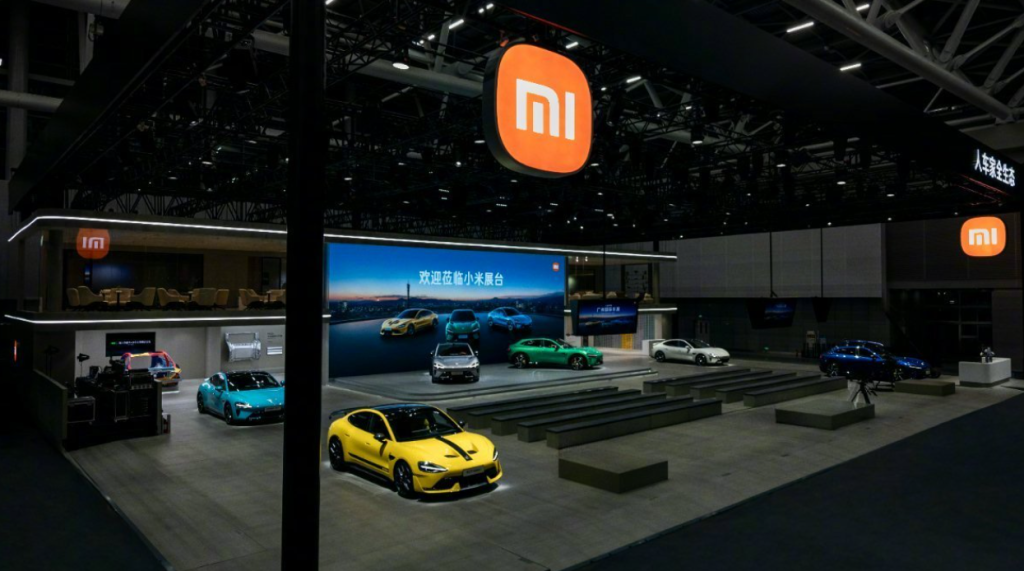
Xiaomi Auto Hits 500,000 Vehicle Milestone in Record-Breaking 19 Months
In a stunning display of industrial might and technological prowess, Xiaomi Auto has shattered records by producing its 500,000th electric vehicle in just 19 months—a feat that industry experts are calling a “quantum leap” in smart EV manufacturing. This achievement catapults the tech giant from smartphone powerhouse to legitimate automotive contender, proving that Xiaomi’s “Go Big or Go Home” philosophy extends far beyond mobile devices.
Breaking the Mold: A New Era of EV Production
The Beijing-based automaker reached this milestone faster than any other new energy vehicle manufacturer globally, setting a blistering pace that has traditional automakers scrambling to understand how Xiaomi pulled off such a feat. The company’s first vehicle, the SU7 sedan, launched in March 2024, and now barely a year and a half later, half a million units are already rolling off assembly lines.
“Five hundred thousand units might seem modest to automotive giants,” Xiaomi founder Lei Jun admitted on Weibo, “but for Xiaomi Auto, this represents a monumental leap forward. We’ve built an entire ecosystem from the ground up—R&D, manufacturing, sales, delivery, and after-sales service—and we’re just getting started.”
The Numbers Game: What Makes This Achievement Extraordinary
To put this into perspective, consider that Tesla took approximately 17 years to reach its first 500,000 vehicles, while traditional automakers like Volkswagen and Toyota built their massive production capabilities over decades. Xiaomi accomplished this in less than two years, leveraging its expertise in supply chain optimization, manufacturing efficiency, and—perhaps most crucially—its massive existing customer base of over 500 million active users.
The company’s production trajectory shows exponential growth: 75,869 vehicles in Q1 2025, 81,302 in Q2, and a staggering 108,796 in Q3. October saw the Xiaomi YU7 SUV claim the top spot in domestic SUV sales, a testament to the brand’s growing appeal in the competitive Chinese market.
Beyond Manufacturing: A Holistic Approach to Smart Mobility
What separates Xiaomi Auto from other EV startups isn’t just speed—it’s the company’s integrated approach to smart mobility. Xiaomi isn’t building cars; it’s creating intelligent, connected devices on wheels. Each vehicle comes packed with the company’s HyperOS operating system, AI-powered driver assistance, and seamless integration with Xiaomi’s broader ecosystem of smart home devices.
“We’re not just manufacturing vehicles; we’re redefining what mobility means in the age of artificial intelligence,” said Lu Weibing, Xiaomi Group partner. “Our cars are essentially data centers on wheels, constantly learning and evolving through over-the-air updates.”
The Safety-First Philosophy
Despite the breakneck pace of production, Xiaomi emphasizes that safety remains paramount. “Safety is our foundation and our top priority,” Lei Jun stated emphatically. “While we accelerate production to meet demand, we will never compromise on quality or safety standards.”
This commitment to safety doesn’t slow them down—it enables them to move faster. By building robust quality control systems from the outset and leveraging AI-powered quality assurance, Xiaomi has managed to scale rapidly without the production bottlenecks that plague many new EV manufacturers.
Financial Fireworks: The Numbers Behind the Success
The financial results tell a compelling story of a company executing its automotive vision flawlessly. Xiaomi Group reported Q3 2025 revenue of RMB 113.1 billion ($15.7 billion), representing a 22.3% year-over-year increase. Adjusted net profit reached RMB 11.3 billion ($1.56 billion), up an impressive 80.9%.
Smart electric vehicles and AI-related businesses contributed RMB 29 billion ($3.97 billion) to this total, with 108,796 new cars delivered during the quarter. The company is on track to meet its ambitious annual delivery target of 350,000 vehicles this week—a target that seemed audacious when first announced.
The Secret Sauce: Vertical Integration and Ecosystem Advantage
Xiaomi’s success stems from several unique advantages that traditional automakers lack. First, the company’s deep expertise in hardware manufacturing, software development, and supply chain management creates natural synergies in automotive production. Second, Xiaomi’s existing ecosystem of smartphones, smart home devices, and IoT products provides a ready-made customer base eager to adopt integrated mobility solutions.
“The beauty of Xiaomi’s approach is that we’re not starting from zero,” explained an industry analyst who requested anonymity. “They’re leveraging existing manufacturing relationships, software expertise, and most importantly, customer trust built over a decade in the consumer electronics space.”
Looking Ahead: The Road to a Million
With 500,000 vehicles already produced, Xiaomi Auto is setting its sights on even more ambitious targets. Industry insiders suggest the company could reach one million vehicles within the next 12-15 months, potentially making it one of the fastest-growing automotive brands in history.
The company’s roadmap includes expanding its model lineup, with the YU7 SUV already proving popular and additional models reportedly in development. Xiaomi is also investing heavily in autonomous driving technology, battery innovation, and manufacturing automation.
Global Ambitions: Beyond China’s Borders
While currently focused on the Chinese market, Xiaomi has global ambitions for its automotive division. The company’s expertise in international markets, combined with its reputation for delivering high-quality products at competitive prices, positions it well for eventual expansion into Europe, Southeast Asia, and potentially North America.
“We’re building a global automotive brand that embodies the same values that made Xiaomi successful in smartphones: innovative technology, exceptional value, and a relentless focus on user experience,” Lei Jun stated during a recent investor call.
The Bigger Picture: Reshaping the Automotive Industry
Xiaomi’s achievement represents more than just impressive production numbers—it signals a fundamental shift in how the automotive industry operates. The traditional model of vertical integration and decades-long development cycles is being disrupted by tech companies that can leverage software, data, and ecosystem advantages to move at unprecedented speeds.
This milestone proves that newcomers can successfully enter the automotive space, challenging established players and accelerating the transition to electric and intelligent vehicles. As more tech companies follow Xiaomi’s lead, the entire industry may need to adapt to survive in an increasingly software-defined world.
Tags & Viral Phrases:
- Record-breaking EV production
- 500,000 vehicles in 19 months
- Fastest EV manufacturer milestone
- Xiaomi Auto revolution
- Smart mobility breakthrough
- Tech giant enters automotive
- Electric vehicle production speed record
- Xiaomi SU7 success story
- New energy vehicle innovation
- Automotive industry disruption
- Tech meets automotive
- Ecosystem advantage in EVs
- AI-powered car manufacturing
- Vertical integration success
- Global EV market challenger
- Smartphone company builds cars
- Manufacturing efficiency breakthrough
- Smart electric vehicle pioneer
- Automotive startup achievement
- Electric vehicle market transformation
- Tech company automotive success
- Next-generation mobility solution
- Connected car revolution
- Data-driven automotive manufacturing
- Software-defined vehicles
- Over-the-air updates in cars
- Smart home meets smart car
- HyperOS in automobiles
- Autonomous driving development
- Battery technology innovation
- Sustainable transportation future
- Electric vehicle adoption acceleration
- Automotive industry transformation
- Tech company automotive entry
- Manufacturing speed record
- Electric vehicle production milestone
- Smart mobility ecosystem
- Connected transportation solution
- AI in automotive manufacturing
- Next-gen electric vehicles
- Tech meets traditional industry
- Automotive software revolution
- Electric vehicle market disruption
- Smart car technology breakthrough
- Manufacturing efficiency innovation
- Electric vehicle production excellence
- Tech company automotive achievement
- Smart mobility advancement
- Connected car ecosystem
- Electric vehicle industry leader
- Automotive technology innovation
- Smart transportation future
- Electric vehicle market leader
- Tech company automotive success
- Smart car development
- Connected mobility solution
- Electric vehicle production excellence
- Tech company automotive milestone
- Smart mobility achievement
- Connected car innovation
- Electric vehicle market transformation
- Tech company automotive breakthrough
- Smart transportation solution
- Electric vehicle production success
- Tech company automotive revolution
- Smart mobility advancement
- Connected car technology
- Electric vehicle market leader
- Tech company automotive achievement
- Smart transportation future
- Electric vehicle industry innovation
- Tech company automotive success
- Smart car development
- Connected mobility solution
- Electric vehicle production excellence
- Tech company automotive milestone
- Smart mobility achievement
- Connected car innovation
- Electric vehicle market transformation
- Tech company automotive breakthrough
- Smart transportation solution
- Electric vehicle production success
- Tech company automotive revolution
,


Leave a Reply
Want to join the discussion?Feel free to contribute!