
xx-fractional-scale-v2 Aims To Improve Wayland Fractional Scaling
Wayland Protocol Takes Bold Step Toward Seamless Fractional Scaling
In a significant leap forward for the open-source graphics stack, developers have unveiled a new experimental protocol aimed at resolving long-standing frustrations with fractional scaling on Wayland. The initiative, dubbed xx-fractional-scale-v2, promises to eliminate visual artifacts and coordinate mismatches that have plagued multi-monitor setups and high-DPI displays for years.
The proposal comes from KDE developer Xaver Hugl, who opened a merge request today in the official Wayland Protocols repository. This isn’t Hugl’s first foray into fractional scaling solutions—he originally floated a similar concept back in 2022 under the name wp-fractional-scale-v2. That earlier effort introduced the idea of using alternative coordinate spaces to sidestep the limitations of integer-based logical coordinates. Now, rebranded as xx-fractional-scale-v2 to avoid naming conflicts, the protocol is back with renewed momentum and backing from the broader Wayland community.
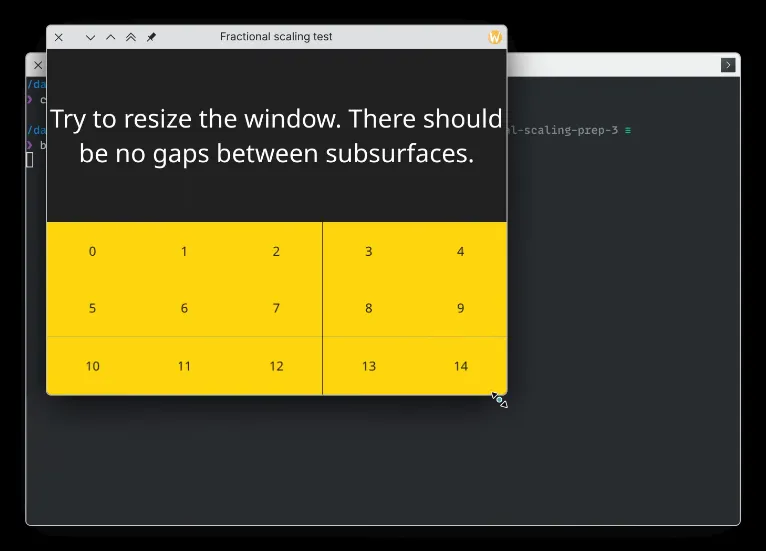
At its core, the protocol addresses a fundamental problem: Wayland’s current scaling model relies on integer logical coordinates, which become lossy when fractional scaling factors (like 1.5x or 1.75x) are applied. This mismatch can result in subtle but noticeable gaps between windows, panels, and sub-surfaces—especially on mixed-resolution setups. The new protocol proposes a different coordinate space where clients and compositors can communicate using unscaled pixels, preserving precision and eliminating rounding errors.
KDE’s Vlad Zahorodnii has already implemented the protocol in a KWin compositor merge request, demonstrating both the problem and the solution in action. In his explanation, Zahorodnii highlighted that the logical coordinate system’s limited resolution can cause “gaps between maximized windows and panels or gaps between sub-surfaces.” His demo application visually contrasts the current behavior with the proposed fix, using video recordings to make the differences starkly clear.
One striking example shared in the merge request shows a maximized window failing to align perfectly with a panel due to rounding discrepancies—a visual glitch that, while small, undermines the Wayland ethos that “every frame is perfect.” The new protocol aims to restore that promise by ensuring pixel-perfect alignment regardless of scaling factor.
The implications are significant. For users with mixed-DPI environments—say, a 4K monitor alongside a 1080p display—fractional scaling has been a persistent headache. The xx-fractional-scale-v2 protocol could make such setups far more usable, reducing the need for awkward workarounds or sacrificing sharpness for consistency.
While still experimental, the protocol has already sparked interest across the Linux desktop ecosystem. If adopted widely, it could become a cornerstone of future Wayland improvements, particularly as high-resolution and variable-refresh-rate displays become the norm.
As the merge request moves through review, the community will be watching closely. The protocol’s success could mark a turning point in Wayland’s maturation, proving that even long-standing limitations can be overcome with innovative thinking and collaborative development.
Tags: Wayland, fractional scaling, KDE, KWin, Xaver Hugl, Vlad Zahorodnii, Linux desktop, open source, display protocols, high DPI, multi-monitor, pixel-perfect, experimental protocol, Wayland Protocols, compositor, scaling fixes, display technology, Linux graphics, desktop environment, open source innovation
Viral Phrases: “every frame is perfect,” pixel-perfect alignment, fractional scaling breakthrough, Wayland’s next big leap, goodbye to visual gaps, unscaled pixels revolution, KDE leads the charge, Linux desktop evolution, high-DPI harmony, compositor magic, display precision perfected, open source graphics win, multi-monitor mastery, scaling without compromise, the future of Wayland is now
,


Leave a Reply
Want to join the discussion?Feel free to contribute!