
Yahoo Scout is an AI ‘answer engine’ that wants to challenge Perplexity and Google’s AI mode
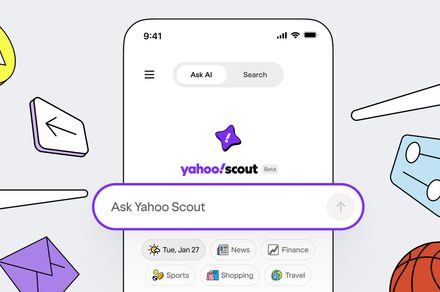
Yahoo Enters the AI Search Wars with Scout, Betting on Transparency in an Age of Black-Box Answers
In a bold move that signals Yahoo’s intention to reclaim relevance in the search engine wars, the once-dominant internet portal has unveiled Scout, an AI-powered “answer engine” that aims to challenge the supremacy of Google’s AI Mode and the rising star Perplexity. But Scout isn’t just another AI search tool—it’s Yahoo’s calculated gamble that users still crave visible sources, transparent citations, and the ability to trace answers back to their origins.
The timing couldn’t be more critical. Over the past two years, the search landscape has undergone a seismic shift. Google, long the undisputed king of search, has doubled down on AI-generated answers, often burying traditional blue links beneath conversational summaries. Perplexity, the darling of the AI search world, has built its reputation on delivering concise, cited answers—but even it has faced criticism for occasionally obscuring source links behind layers of UI. Yahoo, sensing an opportunity, is betting that users are ready for a return to transparency.
What Makes Scout Different?
At its core, Scout is designed to function as an AI answer engine—a hybrid between a traditional search engine and a conversational AI assistant. When you ask Scout a question, it doesn’t just spit out a paragraph of text and call it a day. Instead, it provides a detailed response while prominently displaying the sources it drew from. Think of it as a research assistant that not only gives you the answer but also shows you exactly where it found it.
For example, if you ask Scout about the latest developments in quantum computing, it might respond with a concise summary of recent breakthroughs, but it will also list the academic papers, news articles, and industry reports it consulted. Each source is clickable, allowing users to dive deeper into the original material. This approach is a stark contrast to Google’s AI Mode, which often presents answers without clear attribution, and Perplexity, which sometimes hides sources behind a “References” button.
Yahoo’s Strategy: Transparency as a Differentiator
Yahoo’s decision to prioritize transparency isn’t just a design choice—it’s a strategic move aimed at differentiating Scout in a crowded market. The company is betting that users, particularly those in academic, professional, and research-oriented fields, will value the ability to verify information and explore sources in depth. This is especially relevant in an era where misinformation and AI “hallucinations” are growing concerns.
“Scout is built on the principle that trust is earned through transparency,” said a Yahoo spokesperson in a statement to Digital Trends. “We believe users deserve to know where their information comes from, and we’re committed to making that as easy as possible.”
This philosophy aligns with a broader trend in the tech industry, where companies are grappling with the ethical implications of AI-generated content. By putting sources front and center, Yahoo is positioning Scout as a responsible alternative to its competitors.
The Competitive Landscape
Scout enters a fiercely competitive market. Google’s AI Mode, launched in 2024, has been a game-changer, integrating generative AI into the search experience in ways that feel seamless and intuitive. Perplexity, meanwhile, has carved out a niche as the go-to tool for users who want quick, cited answers without wading through traditional search results.
But both Google and Perplexity have faced criticism for their approaches. Google’s AI Mode has been accused of diminishing the visibility of traditional websites, potentially harming publishers and content creators. Perplexity, despite its emphasis on citations, has been criticized for occasionally over-summarizing or misattributing information.
Yahoo’s Scout aims to strike a balance. It offers the convenience of AI-generated answers while maintaining the transparency and credibility of traditional search. This could appeal to users who are wary of the black-box nature of AI but still want the efficiency of modern search tools.
Technical Innovations and Challenges
Under the hood, Scout leverages a combination of large language models (LLMs) and proprietary algorithms to deliver its answers. Yahoo has invested heavily in training its AI on a diverse range of datasets, ensuring that Scout can handle complex queries across multiple domains. The company has also implemented robust fact-checking mechanisms to minimize the risk of inaccuracies.
However, Scout faces significant challenges. Training an AI to provide accurate, cited answers at scale is no small feat, and Yahoo will need to continuously refine its models to keep up with the competition. Additionally, the company must navigate the delicate balance between providing concise answers and overwhelming users with too much information.
There’s also the question of monetization. Google and Perplexity have established revenue models, whether through advertising or premium subscriptions. Yahoo will need to figure out how to generate revenue from Scout without compromising its commitment to transparency.
The Future of Search: A Return to Transparency?
Scout’s launch raises an intriguing question: Is the future of search a return to transparency? As AI becomes increasingly integrated into our daily lives, the demand for explainable AI and verifiable information is likely to grow. Yahoo’s bet on Scout suggests that there’s still a significant audience for search tools that prioritize clarity and accountability.
Of course, it’s too early to say whether Scout will succeed in challenging Google and Perplexity. The search engine market is notoriously difficult to disrupt, and Yahoo will need to execute flawlessly to gain traction. But if Scout can deliver on its promise of transparent, reliable answers, it could carve out a valuable niche in the AI search landscape.
Conclusion
Yahoo’s Scout represents a bold experiment in the evolution of search. By prioritizing transparency and source visibility, it offers a compelling alternative to the black-box approaches of Google and Perplexity. Whether it can succeed in a market dominated by tech giants remains to be seen, but one thing is clear: the search wars are far from over, and Yahoo is determined to make its mark.
As users, we stand to benefit from this competition. With more options than ever before, we can choose the search tools that best align with our values and needs. And if Scout lives up to its promise, it could be the tool that finally brings transparency back to the forefront of the search experience.
Tags & Viral Phrases:
AI search engine, Yahoo Scout, transparent AI, cited answers, source visibility, Google AI Mode, Perplexity competitor, explainable AI, trustworthy search, AI answer engine, search transparency, digital trends, tech innovation, AI-powered search, future of search, responsible AI, misinformation, AI hallucinations, search wars, Yahoo comeback, tech news, viral tech, cutting-edge search, AI revolution, search evolution, user trust, ethical AI, tech competition, AI transparency, search market disruption.
,


Leave a Reply
Want to join the discussion?Feel free to contribute!