
You Asked: TV brightness fatigue, Samsung’s format choices, and the best TV for bright rooms
The Great TV Brightness Debate: Can We Please Just Turn It Down a Notch?
In today’s episode of “You Asked,” we’re diving deep into the burning question (pun absolutely intended) that’s lighting up living rooms across America: Can we stop with the TV brightness arms race already?
The Brightness Fatigue Is Real
Look, I get it. Walking into your local electronics store these days feels like staring directly into the sun. Every manufacturer is shouting from the rooftops about how their latest model is “X times brighter than last year!” or “the brightest TV ever created by human hands!” It’s exhausting, and frankly, it’s starting to feel like we’re all participating in some bizarre competition to see who can blind themselves first.
But here’s the thing: brightness sells. It’s one of the few areas where manufacturers can consistently show improvement year after year. Take OLED TVs, for instance. These beautiful panels have been around for over a decade, but they’ve come a long way from their humble beginnings. Just four or five years ago, they weren’t even close to the brightness levels we’re seeing today.
And let’s be honest – that extra brightness does serve a purpose. It helps OLEDs maintain their incredible contrast against pure blacks, and those peak highlights really make the viewing experience pop. With Mini LED TVs, that increased brightness means being able to overpower ambient light in bright rooms and even sunlight streaming through your windows.
But Can’t We Tame These Beasts?
Here’s where things get interesting. Despite what the marketing departments would have you believe, modern TVs aren’t actually impossible to tame. In fact, many of them come with specific picture profiles designed specifically for dark room viewing.
Take Hisense, for example. They’ve got these clever Theater Day and Theater Night modes that let you adjust the brightness based on your viewing environment. During the day, you can crank it up to overpower that pesky sunlight. But at night, when you’re trying to create that perfect cinematic atmosphere, you can turn it down significantly so your TV isn’t lighting up the entire room like some kind of electronic sun.
This is pretty standard across most modern TVs. While manufacturers love to brag about maximum brightness levels, they also understand that not everyone wants their living room to feel like they’re watching TV on the surface of the sun. Most TVs come with a plethora of settings that can be adjusted and tailored to suit your specific needs and preferences.
So yes, while TV brightness might feel like it’s getting out of control, the reality is that you have more control over it than you might think. The key is knowing where to look and how to adjust those settings to create the perfect viewing experience for your space.
The Samsung G-Sync Conundrum
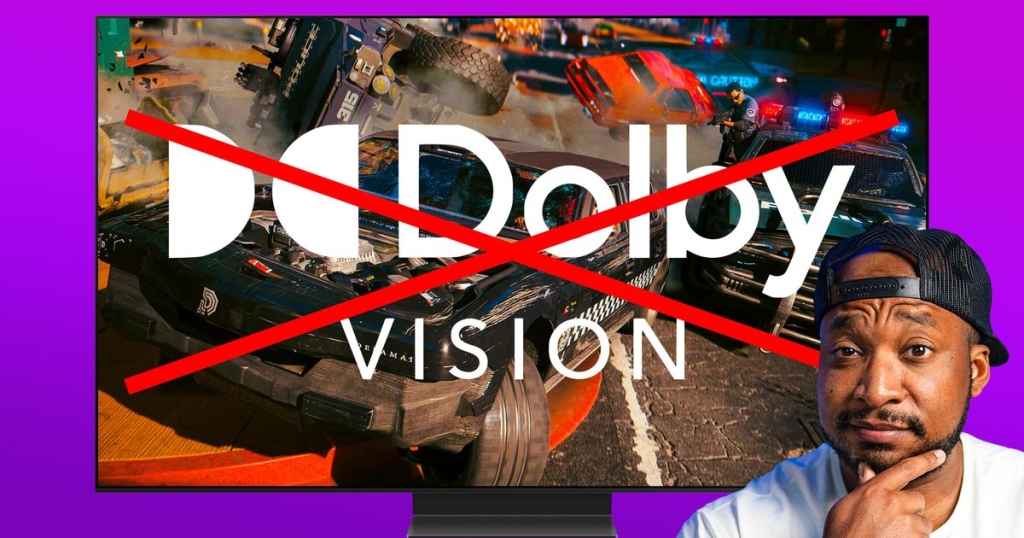
Now, let’s shift gears and talk about something that’s been causing quite a stir in the tech community: Samsung’s decision to add Nvidia G-Sync support to their TVs while continuing to snub Dolby Vision.
This has been a point of frustration for many Samsung TV owners, and I’ll admit – I’m a bit torn on the issue myself. I’ve seen the improvements that Dolby Vision 2 brings to the table, but I also have a Samsung Mini LED TV at home that I watch every single day without Dolby Vision, and I have zero complaints.
And you know what? I’d wager that a lot of Samsung OLED owners feel the same way. Those QD-OLED panels on the high-end models deliver a more colorful punch than most of the competition, and HDR 10 and 10 Plus are nothing to scoff at.
So why the snub? Well, I’m just guessing here, but Samsung probably doesn’t see Dolby Vision as enough of an “upgrade” to justify the licensing costs. And let’s face it – they sell tons of units every year. A good chunk of the market seems perfectly happy without Dolby Vision support.
When it comes to gaming, however, the story changes. Adding Nvidia G-Sync support is a big deal for gamers, and I’d assume Samsung has done their research and sees this as a feature that will help sell more of their OLED TVs to the gaming crowd.
They’ve also doubled down on their own HDR 10 Plus Advanced format, which boasts great picture control through enhanced metadata. So while Dolby Vision might not be coming to Samsung anytime soon, they’re definitely not ignoring the need for high-quality HDR formats.
The Brightest TVs for Sun-Soaked Spaces
Alright, let’s talk about the real MVP of this article: what’s the brightest TV for a room with wraparound windows?
If you’re dealing with a particularly bright space – especially if you’ve got windows behind your TV as well – you’re going to want to look at some of the brightest options on the market. And when it comes to sheer brightness, Mini LED is where it’s at.
TCL and Hisense make some really great options in this category. The TCL QM8K and the Hisense U8QG are both excellent choices that can really help your TV stand out among all that natural light. Plus, since these are 2025 models, you can probably snag them for a pretty good price right now.
But wait, there’s more! Sony’s Bravia 9 is another fantastic pick for bright rooms. Not only does it get incredibly bright, but it also does a great job holding its contrast at high luminance levels. That means you’re not sacrificing picture quality for brightness – you’re getting the best of both worlds.
And then there’s TCL’s QM9K, which I haven’t seen in person yet but looks absolutely insane on paper. We’re talking about a TV rated to hit up to 6,500 nits with 6,000 dimming zones. Is it overkill for most scenarios? Absolutely. But maybe not for your sun-drenched living room.
Now, I know what you’re thinking – what about OLED? Don’t count them out just yet. Samsung’s S95F, with its anti-glare screen, does an excellent job battling reflections. And LG’s G5 has significantly stepped up its brightness game compared to previous models.
At the end of the day, the best TV for your bright room will depend on your budget and specific needs. But if you can get one of these bright TVs in a larger size, it’ll really help it overcome all that natural light and create the perfect viewing experience, no matter how sunny it gets outside.
Tags: TV brightness, OLED vs Mini LED, Dolby Vision controversy, Samsung G-Sync support, brightest TVs 2025, Hisense U8QG, TCL QM8K, Sony Bravia 9, wraparound windows, TV settings for dark rooms, HDR formats, gaming TVs, anti-glare technology, TV buying guide, living room lighting solutions
Viral Sentences:
- “Walking into an electronics store these days feels like staring directly into the sun”
- “It’s starting to feel like we’re all participating in some bizarre competition to see who can blind themselves first”
- “Your TV shouldn’t be lighting up the entire room like some kind of electronic sun”
- “Samsung probably doesn’t see Dolby Vision as enough of an ‘upgrade’ to justify the licensing costs”
- “A TV rated to hit up to 6,500 nits with 6,000 dimming zones – is it overkill? Absolutely”
- “The best TV for your bright room will depend on your budget and specific needs”
- “If you can get one of these bright TVs in a larger size, it’ll really help it overcome all that natural light”
,


Leave a Reply
Want to join the discussion?Feel free to contribute!