
YouTube finally arrives on Vision Pro — worth the wait?
After Two Years, YouTube Finally Lands on Apple Vision Pro—But Is It Worth the Wait?
Apple Vision Pro users have been holding their breath for nearly two years, and finally, the wait is over. Google has officially launched its YouTube app for visionOS, bringing the world’s largest video platform to Apple’s $3,499 spatial computing headset. But while the arrival of YouTube is a milestone, early reactions suggest it’s more of a cautious step than a revolutionary leap.
The Long-Awaited Arrival
When Apple Vision Pro debuted in February 2024, one of the most glaring omissions was YouTube. Google initially advised users to rely on Safari’s web interface, but that workaround was far from ideal. Just days after the headset’s launch, Google added YouTube to its roadmap, but the app’s release took nearly two years—a delay that left many Vision Pro owners frustrated.
The new app, available as a free download on the App Store, supports standard videos, Shorts, and immersive formats like 3D, 360-degree, and VR180 content. For users with the newer M5 chip version of Vision Pro, 8K resolution is even an option. But early reports suggest compression issues make the quality less than stellar.
Mixed First Impressions
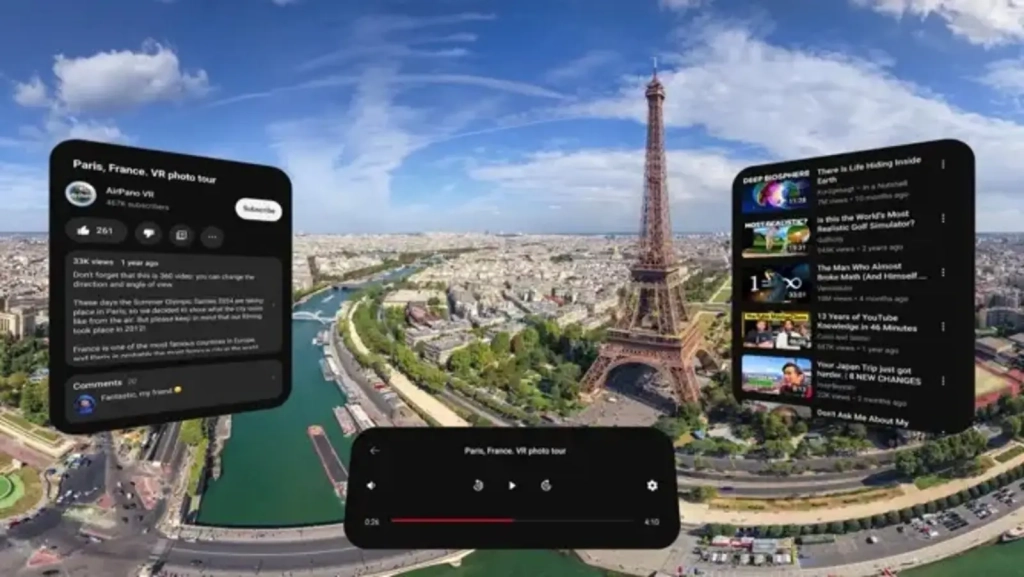
The initial reactions from reviewers have been lukewarm at best. The app offers spatial features like floating sidebars and video controls, functioning similarly to YouTube’s iPad app. However, significant limitations have left some users underwhelmed.
One of the biggest disappointments is the lack of theater mode for standard 2D videos. The massive virtual display that can hover over scenic visionOS environments simply isn’t enabled in the YouTube app. For regular YouTube watching, Safari actually provides a better experience with its theater mode support. The app seems primarily optimized for immersive 3D and VR180 content rather than the standard videos most users watch daily.
There are also bugs. The Shorts tab currently appears blank despite being present in the interface, a puzzling omission given that vertical video would work well on the Vision Pro’s expansive display. Even TikTok managed to create a fully native Vision Pro experience, making YouTube’s stumbles more noticeable.
What You Get (and Don’t Get)
The app includes expected features like subscriptions, playlists, watch history access, and the ability to read comments in floating boxes above videos. It works with visionOS’s built-in environments, allowing you to watch videos while surrounded by scenic virtual backdrops. Size-wise, the app weighs 180MB and supports more than 75 languages.
What’s missing is more telling. There’s no custom YouTube environment, no optimized theater mode for regular videos, and the compression quality on even 8K VR content reportedly leaves much to be desired. Engadget succinctly captured the sentiment: navigating YouTube’s desktop interface via finger gestures in Safari was already awkward; the native app “certainly couldn’t be worse.”
Was It Worth the Wait?
For Vision Pro owners who primarily want to explore YouTube’s growing library of spatial videos—3D content, 360-degree videos, and VR180 experiences—the app is a clear improvement. The dedicated Spatial tab and native playback make discovering and enjoying this content significantly easier than the Safari workaround.
But for the vast majority of YouTube watching, which involves standard rectangular videos, the app feels like a bare-minimum effort. Safari actually delivers a better experience for traditional content thanks to its theater mode support. Perhaps Gizmodo put it best when calling it a reminder that Vision Pro “still has a long way to go before becoming the XR revolution Apple had hoped.”
The real question isn’t whether the app was worth the two-year wait—clearly, it wasn’t. The question is whether YouTube’s arrival signals growing developer confidence in the platform, or if it’s simply Google hedging its bets as it launches competing spatial computing hardware. For now, Vision Pro users finally have official YouTube access, even if it feels more like checking a box than delivering a premium spatial computing experience.
The YouTube app for Vision Pro requires visionOS 26 or later and is compatible with both M2 and M5 chip models.
Where to download: App Store
Tags: #AppleVisionPro #YouTube #SpatialComputing #MixedReality #TechNews #Apple #Google #visionOS #M5Chip #8K #VR180 #3DContent #TechReview #AppleHeadset #XR #FutureOfTech #ImmersiveTech #DigitalEntertainment #TechInnovation #GadgetNews
Viral Sentences:
- “After two years, YouTube finally arrives on Apple Vision Pro—but is it worth the wait?”
- “The app lacks theater mode for standard 2D videos, leaving users underwhelmed.”
- “Early reports suggest compression issues make 8K resolution less than stellar.”
- “Safari actually provides a better experience for traditional content thanks to its theater mode support.”
- “The real question isn’t whether the app was worth the two-year wait—clearly, it wasn’t.”
- “YouTube’s arrival signals growing developer confidence in the platform, or is it just Google hedging its bets?”
- “For now, Vision Pro users finally have official YouTube access, even if it feels more like checking a box than delivering a premium spatial computing experience.”
- “The YouTube app for Vision Pro requires visionOS 26 or later and is compatible with both M2 and M5 chip models.”
,
Leave a Reply
Want to join the discussion?Feel free to contribute!