
You Are Not Prepared to Learn the Size of Neanderthal Infants
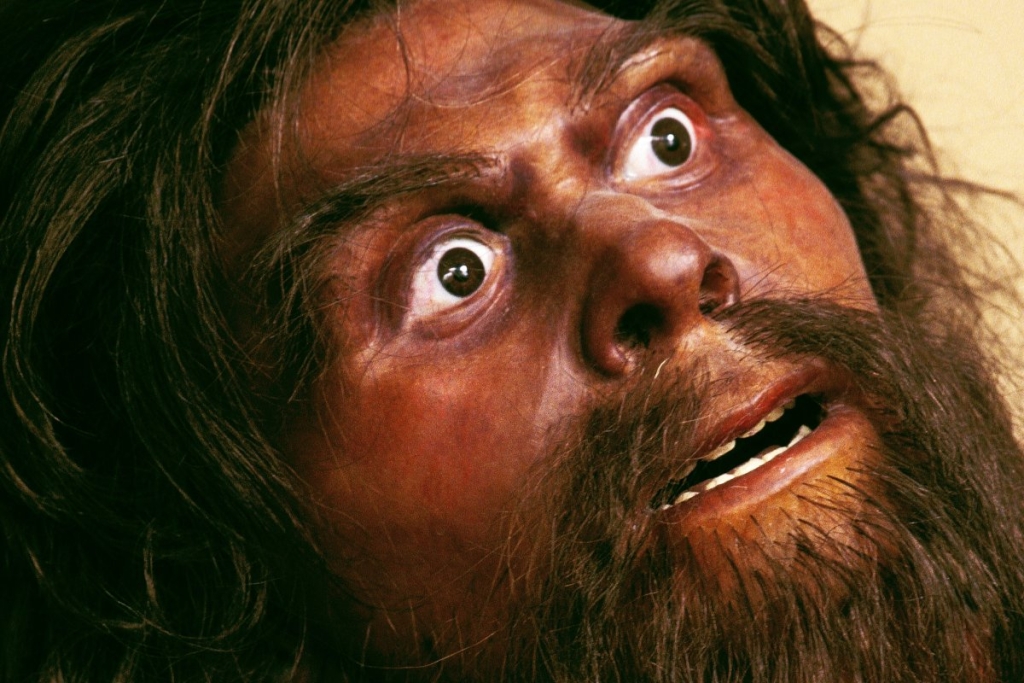
Neanderthal Babies Were Real-Life Bamm-Bamm Rubbles — Bigger and Faster-Growing Than Modern Humans
In a discovery that sounds like it’s straight out of a prehistoric version of The Flintstones, scientists have uncovered startling new evidence about Neanderthal infants: they were bigger, bulkier, and developed faster than modern human babies.
A team of researchers from Israel and Europe analyzed the skeletal remains of a six-month-old Neanderthal child discovered in a cave in northern Israel. What they found was remarkable: despite being only half a year old, this ancient infant was already the size of a one-year-old modern human baby. In other words, Neanderthal infants were essentially the real-life equivalents of Bamm-Bamm Rubble — the famously strong and sturdy baby from the classic animated series.
The Science Behind the Size
The child, affectionately nicknamed “Amud 7” after the cave where it was found, was buried approximately 51,000 to 56,000 years ago alongside about 20 other Neanderthals. The remains were originally discovered in the 1960s, but it wasn’t until the 1990s that scientists began serious study, and only now has a comprehensive analysis been published.
The research team, led by Ella Been, a professor of anatomy and anthropology at Tel Aviv University, noticed something unusual. The baby’s bones were remarkably thick and its skull unusually large — features that would typically suggest an older age. However, when they examined the development of the teeth, a different story emerged.
“I believe that the histological age of the teeth is more accurate than age measured by the volume of the long bones or the endocranial cavity for estimating such a young age,” Been explained to El País.
This discrepancy revealed that Neanderthal infants grew at a significantly faster rate than their modern human counterparts, with both their bodies and brains developing more rapidly.
A Pattern of Robust Development
This isn’t the first evidence suggesting Neanderthals were built differently from birth. A 2022 study found that Neanderthal children already had more robust bones compared to modern human children. And when fully grown, Neanderthals were typically stockier and shorter than contemporary humans.
“When compared with other known Neanderthal infants, the same pattern emerges: faster body and brain growth, suggesting greater energy expenditure,” Been noted. “Understanding this pattern is crucial to understanding who Neanderthals were and how they adapted to their environment.”
The findings, published in the journal Current Biology, represent the first comprehensive study of the child’s 111 recovered bones, providing unprecedented insight into early Neanderthal development.
Survival in a Harsh World
The differences between Neanderthal and modern human infants reflect the very different worlds in which they evolved. Neanderthals lived in Europe and Asia between 400,000 and 40,000 years ago — a period when conditions were significantly harsher than today. This environment created a process of natural selection that seemingly favored the survival of robust, well-built children who could mature quickly.
In a world of extreme cold, scarce resources, and dangerous predators, being born strong and growing fast could mean the difference between life and death. Neanderthal babies needed to be ready for the challenges of their environment from day one.
Not So Different After All
Despite these physical differences, Neanderthals weren’t so different from us in some surprising ways. Evidence suggests that our ancestors didn’t just coexist with Neanderthals — they interbred with them. Male Neanderthals and female humans mated and produced offspring, and traces of these ancient encounters are scattered throughout modern human DNA.
These genetic remnants tell an ancient story of when two hominid species shared the same landscapes, the same challenges, and apparently, the same romantic interests. It appears that even 50,000 years ago, love — or at least attraction — could cross species boundaries.
What This Means for Understanding Human Evolution
This discovery adds another piece to the complex puzzle of human evolution. It shows that even in our earliest stages of life, our extinct cousins were physiologically distinct from us, adapted to a world that no longer exists.
The faster development rate suggests Neanderthals may have had shorter childhoods and reached maturity earlier than modern humans. This could have had significant implications for their social structures, learning patterns, and overall life strategies.
As research continues, each new finding about Neanderthals helps us better understand not just who they were, but also what makes us uniquely human. In some ways, studying these ancient relatives is like looking into an evolutionary mirror — seeing reflections of ourselves shaped by a world we can barely imagine.
The story of Amud 7 and other Neanderthal children reminds us that our evolutionary journey is filled with branches, dead ends, and surprising connections. These sturdy, fast-growing infants may be long gone, but their bones continue to speak, telling us tales of survival, adaptation, and the incredible diversity of the human family tree.
Tags: Neanderthal babies, Bamm-Bamm Rubble, ancient human development, prehistoric infants, Neanderthal evolution, human evolution, Amud 7, Tel Aviv University research, Current Biology study, interspecies mating, ancient DNA, robust bones, faster growth, cave discoveries, human origins, extinct cousins, prehistoric survival, evolutionary adaptation, hominid species, ancient interbreeding
,


Leave a Reply
Want to join the discussion?Feel free to contribute!