
Galaxy S26’s design is Samsung’s ‘core identity,’ and its core problem
Samsung’s Galaxy S26 Design: A Double-Edged Sword That’s Both Iconic and Infuriating
When Samsung executives recently touted the Galaxy S26’s design as “perfect,” they likely weren’t anticipating the wave of criticism that would follow. The company’s design language, which has evolved into what we now recognize as the quintessential Galaxy aesthetic, represents both Samsung’s greatest achievement and its most persistent headache.
The Samsung Design Philosophy: Pride and Problems
Samsung’s SVP Lee Ji-young recently gave the Galaxy S26 design a perfect score, specifically highlighting elements like the “optimal corner curvature” of 7R (a circle with a 7mm radius) that extends even to the S Pen. Meanwhile, Samsung VP Lee Il-hwan emphasized the vertically arranged triple-camera system as “the core identity of the Galaxy.”
After spending considerable time with the base Galaxy S26, I can confirm it’s a solid, dependable device. Coming from a year primarily using Pixel phones, the lighter chassis and slimmer profile feel refreshing. The S26 series finally unified Samsung’s design across all three models, shedding the remaining Note DNA from the Ultra variant.
The result? Practically every recent Galaxy-branded phone from Samsung maintains the same core design: rounded corners, large-and-tall displays, and a triple-lens camera system positioned to the left of the back glass. This consistency is exactly what makes it both Samsung’s greatest strength and its most glaring weakness.
When Recognizability Becomes Anonymity
Some aspects of this critique are undoubtedly subjective. I personally prefer flagship devices with semi-unique appearances that distinguish them from their more affordable counterparts. Being able to instantly identify a $1,100 device from one half its price feels important in today’s market—something Google and Apple have mastered with devices like the Pixel 10a and iPhone 17e.
Samsung takes the opposite approach. The majority of its A-series devices are easily mistaken for premium models at a quick glance. In theory, this cements Samsung’s design as both unique and iconic. However, unlike Google’s distinctive camera bar design, I’d argue Samsung’s aesthetic is simply too anonymous to be truly memorable.
The Imitation Game: Samsung’s Design Under Siege
The situation becomes more complicated when competitors adopt similar aesthetics. The latest base model iPhones, for instance, switched to a two-camera design that bears striking resemblance to Galaxy devices released this decade. Apple claims the change accommodated Vision Pro-enabled video recording, but the result is clear: Samsung’s design suddenly looks remarkably similar to its most bitter rival.
Google has navigated this space more deftly. The company’s camera bar design—introduced five years ago with the Pixel 6 and refined through multiple generations—remains distinctive even as others borrow elements. It’s not just the lens layout but the specific style of the camera visor, lens cover, matching two-tone design, and crucially, the complete lack of table wobble.
The Fundamental Flaw in Samsung’s “Core Identity”
The real problem with Samsung’s design philosophy isn’t that other companies have employed similar designs—it’s that the standard Galaxy look presents a fundamentally flawed user experience in 2026. While competitors like Google have fully resolved issues with camera bumps causing devices to rock on flat surfaces, Samsung’s phones are more wobbly than ever.
Rotating the lenses 90 degrees would effectively solve this issue, but that would violate the company’s own ideals about how its products should work. This rigid adherence to tradition over functionality exemplifies the core problem.
Qi2 Support: The Ultimate Design Failure
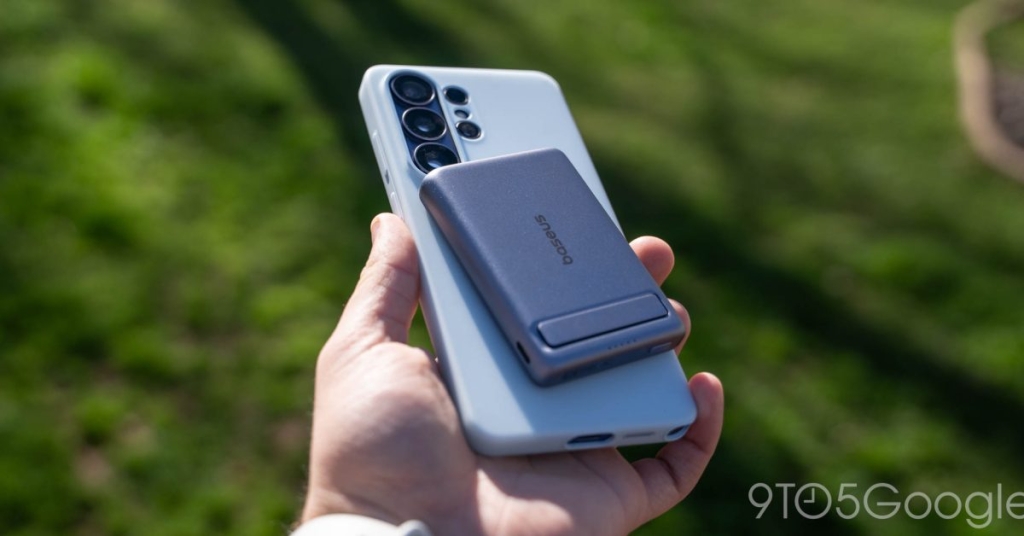
Nothing exemplifies Samsung’s design shortcomings better than its handling of Qi2 support. The company once again opted against including built-in support for magnetic wireless charging, instead relying on first and third-party cases to add that functionality after the fact.
This decision is frustrating enough on its own—I’ve reached for Qi2-enabled accessories purely out of habit while using the case-less S26 before remembering they won’t work. But even if you purchase a supported shell, it might not work with every accessory. Wallets, Pop Sockets, and certain charging pucks have all been known to have alignment issues thanks to the lowest lenses on Samsung’s vertical camera arrangement, and maintaining consistent 25W charging speed becomes a challenge.
The End Result: A Recognizable Yet Problematic Design
The end result is a design that, while certainly identifiable, leaves Galaxy S26 owners with a worse experience than they might find on competing phones. The devices practically require first-party accessories engineered around these shortcomings.
I’m not suggesting Samsung can’t find a recognizable look and feel that works for their branding—and honestly, I wouldn’t mind them finding a way to make something close to its current style functional. However, acting as though this represents the pinnacle of smartphone design feels more dismissive of the future than I’d like.
Features like Qi2 didn’t exist when Samsung initially began utilizing this look, but that doesn’t mean the brand should be given a pass after this generation. Samsung’s design identity has become a victim of its own success—so recognizable that it’s become stagnant, so iconic that it’s become inflexible.
The Galaxy S26 proves that even the most established design languages need evolution, not just refinement. Otherwise, what was once revolutionary becomes merely routine, and what was once innovative becomes simply inconvenient.
Tags & Viral Phrases:
Samsung Galaxy S26 design criticism, vertical camera layout problems, Qi2 wireless charging issues, Samsung vs Google Pixel design comparison, iPhone 17 design similarities, camera bump wobble fix, Samsung design philosophy failure, mobile phone design evolution 2026, why Samsung phones rock on tables, magnetic charging case problems, Samsung Galaxy identity crisis, smartphone design stagnation, Samsung executives design comments, Galaxy S26 user experience problems, camera module design flaws, wireless charging speed issues, Samsung accessory ecosystem problems, mobile design language criticism, smartphone brand identity challenges, why Galaxy phones need cases for Qi2
,

Leave a Reply
Want to join the discussion?Feel free to contribute!