
The 'dumb machine' promising a clean energy breakthrough
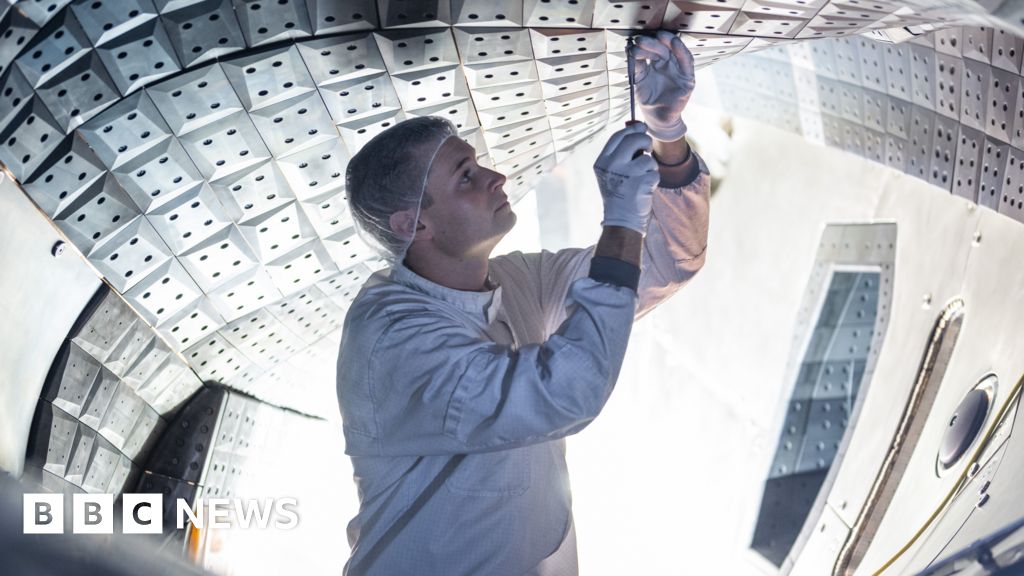
Could the Stellarator Unlock the Future of Fusion Energy? A Deep Dive into the Most Complex Path to Clean Power
Fusion energy has long been hailed as the holy grail of clean power—a process that mimics the sun by fusing light atomic nuclei to release vast amounts of energy. While the promise is immense, the path to achieving practical fusion has been fraught with engineering challenges. Most global efforts have focused on tokamaks, the donut-shaped devices that use powerful magnetic fields to contain superheated plasma. But there’s another contender in the race: the stellarator.
Unlike tokamaks, stellarators don’t rely on a current driven through the plasma to create part of their magnetic field. Instead, they use a complex, twisted magnetic coil design to keep the plasma stable. This makes them inherently steadier but also far more difficult to construct. The most famous example is Germany’s Wendelstein 7-X, a marvel of modern engineering that took nearly two decades to build and represents one of the most advanced stellarators in existence.
The complexity of stellarators comes from their 3D magnetic geometry. The twisted coils must be manufactured with extreme precision—sometimes to within fractions of a millimeter—because even tiny deviations can disrupt plasma confinement. This is both their greatest strength and their biggest obstacle. While tokamaks can achieve high plasma pressures and are currently closer to net energy gain, they suffer from plasma instabilities and require pulsed operation. Stellarators, in theory, can run continuously, which is a game-changer for commercial power generation.
Recent advances in computational design and superconducting materials have breathed new life into stellarator research. Supercomputers can now simulate plasma behavior with incredible accuracy, allowing scientists to optimize coil shapes and magnetic fields in ways that were impossible just a decade ago. This has led to a resurgence of interest, with new projects underway in Japan, China, and the United States.
But the question remains: Is the stellarator the best way forward for fusion energy? Proponents argue that its steady-state operation and reduced risk of disruptive plasma events make it ideal for a future power grid. Critics counter that the astronomical construction costs and engineering complexity could delay its deployment for decades, while tokamaks like ITER edge closer to practical results.
The answer may not be one or the other. Some experts believe a hybrid approach—leveraging the rapid progress of tokamaks while investing in stellarator innovation—could be the most pragmatic path. After all, the ultimate goal is to bring clean, limitless fusion energy to the world, and both concepts offer unique advantages.
As research continues and technology advances, the stellarator’s role in the fusion landscape will become clearer. What’s certain is that solving its engineering riddles could unlock a future where fusion power is not just possible, but practical and sustainable.
Tags / Viral Phrases
stellarator fusion energy, complex engineering marvel, twisted magnetic coils, Wendelstein 7-X breakthrough, steady-state fusion, tokamak vs stellarator, future of clean power, plasma confinement challenges, superconducting materials innovation, computational plasma design, next-gen fusion reactors, limitless energy solution, fusion power race, engineering precision matters, global fusion projects, sustainable energy future, fusion energy revolution
,


Leave a Reply
Want to join the discussion?Feel free to contribute!