
PowerLight’s laser power beaming system keeps a drone in the air for hours during Pentagon test flights
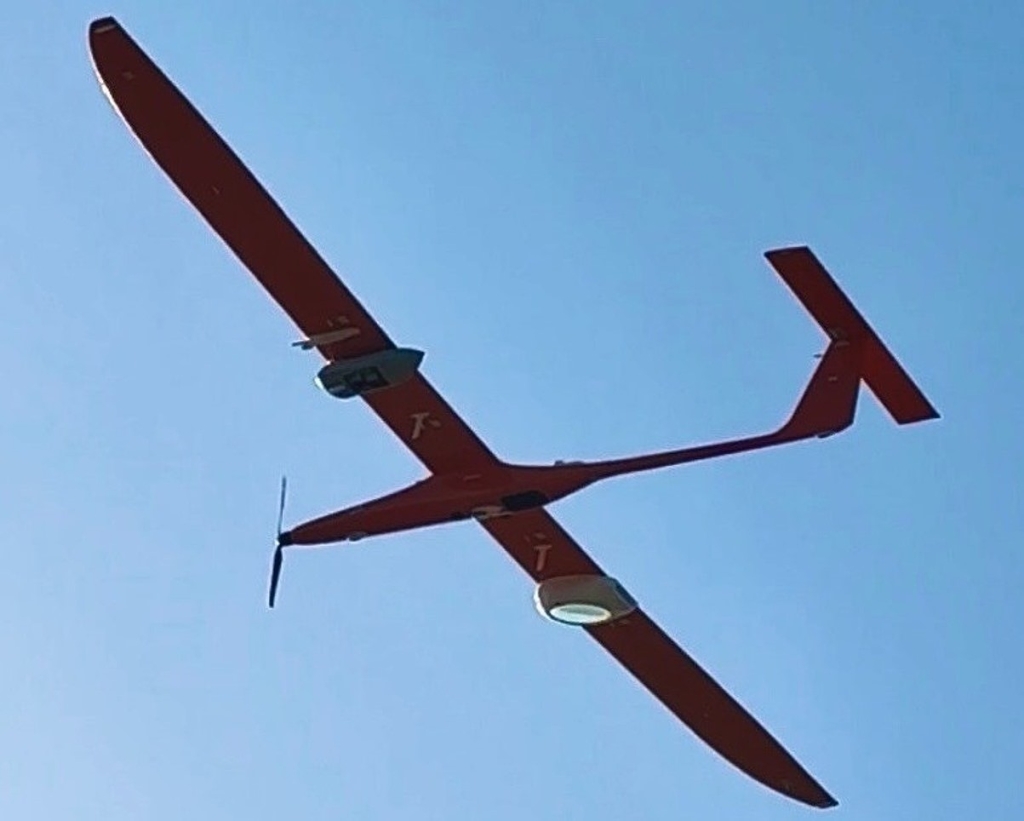
Laser Power Beaming Just Took Flight—Literally—With a Military Drone That Could Stay Airborne Forever
In a groundbreaking leap for aerospace engineering and energy transmission, PowerLight Technologies has achieved what was once confined to the realm of science fiction: keeping a military-grade drone aloft indefinitely using nothing but a focused beam of infrared laser light. The milestone, achieved during a series of high-stakes flight tests for the U.S. Department of Defense, marks a transformative moment in unmanned aerial systems (UAS) capabilities—and possibly, the future of persistent aerial surveillance and combat.
Based in Kent, Washington, PowerLight Technologies (formerly LaserMotive) has spent over 15 years refining its wireless power beaming technology. But the recent demonstrations at South Carolina’s Poinsett Electronic Combat Range represent the first time such a system has been proven at operationally relevant ranges and power levels for a large, fixed-wing military drone. The tests, conducted in partnership with Kraus Hamdani Aerospace and sponsored by U.S. Central Command (CENTCOM) and the Pentagon’s Operational Energy – Innovation Directorate, pushed the boundaries of what’s possible in airborne energy delivery.
The Tech That Could Redefine Flight
At the heart of the breakthrough is PowerLight’s kilowatt-class wireless power system, which was integrated into a KHA K1000ULE drone—a fixed-wing UAS capable of extended flight durations. During the tests, the system successfully acquired and tracked the drone at altitudes up to 5,000 feet, delivering continuous power via a tightly focused infrared laser beam. The beam was steered and focused in real time, ensuring precision delivery while maintaining strict safety protocols.
“This is not just a lab experiment,” said Tim Jenks, CEO of PowerLight Technologies. “The Poinsett Range demonstrations prove what we built and set the stage for a roadmap that scales from a single transmitter to a distributed network. We’re talking about sustaining multiple aircraft simultaneously across a theater of operations.”
The implications are staggering. Currently, drones like the KHA K1000ULE must land to refuel or recharge once their onboard power is depleted. But with continuous wireless power delivery, these aircraft could theoretically remain airborne indefinitely, opening the door to persistent surveillance, real-time data collection, and extended operational reach without the logistical burden of ground-based refueling or battery swaps.
From Science Fiction to Battlefield Reality
PowerLight’s journey began more than 15 years ago with smaller-scale experiments, such as keeping quadcopters airborne using laser power. But the latest tests mark a quantum leap in both scale and capability. The system was developed under the Power Transmitted Over Laser to Uncrewed Aircraft Systems program (PTROL-UAS), a Department of Defense initiative aimed at advancing energy solutions for military UAS platforms.
The KHA K1000ULE drone used in the tests operates under a recently awarded $270 million deployment contract from the AFCENT Battle Lab, underscoring the strategic importance of this technology. The ability to keep such a platform airborne indefinitely could revolutionize military operations, from intelligence, surveillance, and reconnaissance (ISR) missions to search-and-rescue operations and beyond.
Dual-Use Potential: Power and Protection
But the applications of PowerLight’s technology extend beyond just keeping drones in the sky. Jenks highlighted another critical use case: counter-drone defense. “The same autonomous targeting, precision beam control, and real-time system intelligence that keeps a friendly platform aloft has direct applicability to directed-energy counter-UAS strategies,” he explained.
In an era where drone threats are increasingly prevalent on the battlefield, the ability to use the same technology to disable enemy UAVs could provide a significant tactical advantage. By leveraging the precision and control of laser power beaming, military forces could neutralize hostile drones without the need for kinetic weapons, reducing collateral damage and operational risk.
Beyond the Battlefield: A Vision for the Future
While the military applications are compelling, PowerLight’s vision extends far beyond the battlefield. The company has already explored using its technology to power 5G base stations, underwater robotic vehicles, and even lunar rovers in collaboration with Blue Origin. The versatility of laser power beaming makes it a potential game-changer for a wide range of industries, from telecommunications to space exploration.
“Imagine a world where energy is delivered wirelessly, on demand, to any device, anywhere,” Jenks mused. “That’s the future we’re building.”
The Road Ahead
The successful flight tests are just the beginning. PowerLight envisions a future where networks of laser transmitters could sustain entire fleets of drones, enabling unprecedented levels of aerial persistence and operational flexibility. The technology could also be adapted for civilian use, powering everything from delivery drones to emergency response aircraft.
As the world watches this technology evolve, one thing is clear: the era of unlimited flight is no longer a distant dream—it’s here, and it’s powered by light.
Tags:
laser power beaming, wireless energy, military drones, KHA K1000ULE, PowerLight Technologies, indefinite flight, infrared laser, U.S. Central Command, PTROL-UAS, aerospace innovation, directed energy, counter-drone technology, 5G power, lunar rovers, battlefield tech, energy transmission, persistent surveillance, drone warfare, future of flight, sci-fi tech reality
Viral Sentences:
- “This drone could stay airborne forever—thanks to a laser beam.”
- “The future of flight is here, and it’s powered by light.”
- “Military drones just got a major upgrade: unlimited range.”
- “From sci-fi to battlefield: laser power beaming is now a reality.”
- “Imagine a world where drones never have to land.”
- “The same tech that powers drones could also take down enemy UAVs.”
- “This breakthrough could change the game for military and civilian aviation alike.”
- “Laser power beaming: the ultimate energy hack for the skies.”
- “Unlimited flight, unlimited possibilities.”
- “The Pentagon just tested the future of aerial warfare.”
,


Leave a Reply
Want to join the discussion?Feel free to contribute!