
Chinese Workers Horrified as Bosses Direct Them to Train Their AI Replacements
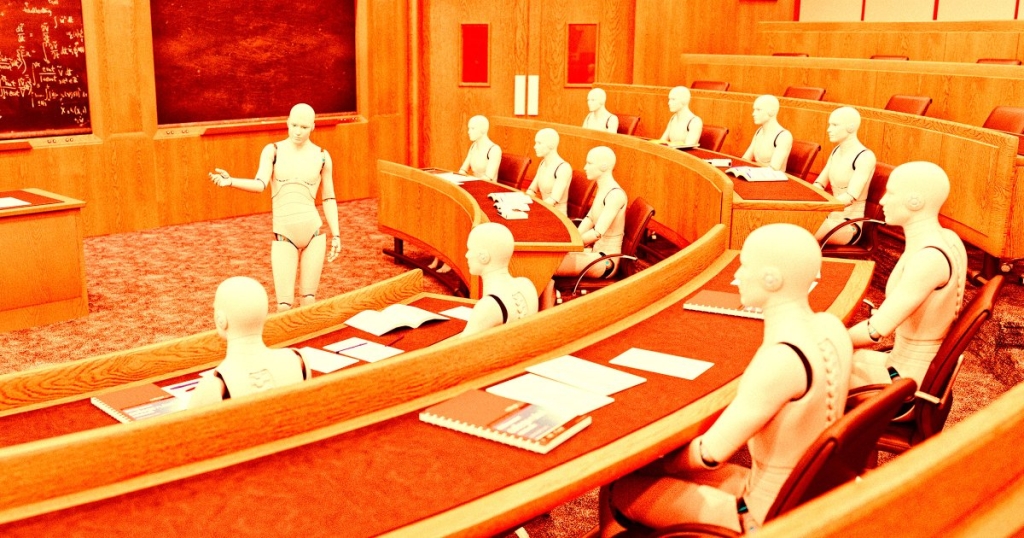
Chinese Workers Face AI Replacement as Companies Automate Their Own Jobs
In a chilling development that mirrors Silicon Valley’s darkest automation trends, Chinese tech workers are now being forced to train artificial intelligence systems designed to replace them—a dystopian scenario that’s sparking fierce resistance across the country’s tech sector.
The situation, detailed in a recent MIT Technology Review investigation, reveals how Chinese companies are systematically documenting employee workflows with the explicit goal of replacing human workers with AI agents. This isn’t some distant future scenario—it’s happening right now in offices from Shanghai to Shenzhen.
At the center of this automation frenzy is OpenClaw, an open-source AI agent software that has exploded in popularity throughout China. The tool has become so ubiquitous that government agencies and state-owned enterprises have begun issuing warnings to employees, cautioning against installing the software due to serious cybersecurity concerns including data leaks and accidental deletion of critical information.
But perhaps the most unsettling aspect of this trend is how it’s playing out on the ground. Workers report being directed by their superiors to meticulously document every aspect of their daily tasks, creating detailed manuals that will eventually power AI systems capable of performing those same functions autonomously.
“It is surprisingly good,” Shanghai-based tech worker Amber Li told MIT Tech Review, describing Colleague Skill, a viral GitHub project that demonstrates just how comprehensive these AI replacements can be. “It even captures the person’s little quirks, like how they react and their punctuation habits.”
The Colleague Skill project, originally created as satire by Tianyi Zhou, has taken on an uncomfortably prophetic quality. Designed to ingest a coworker’s chat history and profile details before automatically generating workplace manuals describing their tasks in minute detail, the tool went viral on Chinese social media precisely because it struck a nerve.
The project’s popularity underscores a growing anxiety among Chinese tech workers who see their livelihoods threatened by the same automation technologies they helped develop. It’s a tension that’s been building for years, with companies increasingly viewing human employees as expensive, error-prone, and ultimately replaceable.
The Mercor Parallel: America’s AI Replacement Factory
This Chinese scenario bears an eerie resemblance to what’s been happening at Mercor, a Silicon Valley startup that has been hiring armies of desperate job-seekers—including educated and underemployed experts—specifically to train AI models that will eventually replace them in the workforce.
For years, Mercor has operated as what amounts to an AI replacement factory, recruiting workers under the guise of employment while systematically training algorithms to perform the very tasks those workers are being paid to do. It’s a business model built on a particularly cruel form of technological cannibalism.
The Mercor situation has become something of a cautionary tale in tech circles, demonstrating just how ruthless companies can be when it comes to cutting labor costs through automation. Workers who thought they were securing stable employment found themselves training their own replacements, often without fully understanding the ultimate purpose of their work.
This parallel between American and Chinese tech sectors reveals something profound about the global nature of AI-driven automation. Regardless of political systems or cultural differences, the economic incentives pushing companies toward workforce replacement through artificial intelligence remain remarkably consistent.
The Great Automation Push: Why Companies Can’t Resist
The push toward AI automation isn’t merely about efficiency—it’s about fundamentally restructuring the economics of labor. Companies are increasingly viewing human workers as a liability: they require salaries, benefits, time off, and are prone to errors, disagreements, and the occasional existential crisis.
AI agents, by contrast, offer the promise of tireless, perfectly consistent performance without the messy complications of human needs. They don’t unionize, don’t call in sick, and don’t demand raises. From a purely financial perspective, the appeal is obvious.
This dynamic is particularly pronounced in China, where intense competition and rapid technological advancement have created an environment where companies feel enormous pressure to automate or risk being left behind. The country’s tech sector operates at a breakneck pace, with businesses constantly seeking competitive advantages through technological innovation.
OpenClaw’s meteoric rise is testament to this pressure. The software has become so integral to Chinese tech workflows that its restriction by government agencies has caused significant disruption, highlighting just how dependent companies have become on AI automation tools.
Resistance in the Ranks: Workers Fight Back
But Chinese tech workers aren’t accepting their replacement without a fight. In a fascinating act of digital resistance, some employees have begun developing tools specifically designed to sabotage the creation of AI agents intended to replace them.
Koki Xu, an AI product manager, created a tool that rewrites worker manuals into non-actionable language, effectively poisoning the well for any AI system trying to learn from those documents. “I originally wanted to write an op-ed, but decided it would be more useful to make something that pushes back against it,” Xu told MIT Tech Review.
This form of resistance represents a new frontier in labor activism—one that’s specifically tailored to the digital age. Instead of traditional strikes or protests, workers are engaging in what might be called “algorithmic sabotage,” using their technical skills to undermine the very systems threatening their jobs.
The effectiveness of such tactics remains to be seen, but they highlight an important truth: employees are beginning to understand that they need to be active participants in shaping how AI technologies are deployed in their workplaces. Passive acceptance is no longer an option when the technology in question threatens to render their skills obsolete.
The Great Debate: Can AI Really Replace Humans?
While companies push forward with automation plans, researchers continue to debate just how effective AI agents will be at actually replacing human workers wholesale. The consensus seems to be that while AI excels at routine, well-defined tasks, it still struggles with the kind of complex problem-solving, emotional intelligence, and creative thinking that many jobs require.
However, this academic debate provides little comfort to workers who find themselves being systematically documented and analyzed for eventual replacement. The mere threat of automation can be enough to fundamentally alter workplace dynamics, creating an atmosphere of insecurity and anxiety.
Moreover, the definition of what constitutes a “routine” task continues to expand as AI capabilities improve. Jobs that once seemed safely in the human domain are increasingly being targeted for automation, from customer service and data entry to more complex analytical roles.
The Chinese experience suggests that we may be approaching a tipping point where the pace of AI development and deployment begins to outstrip our ability to adapt socially and economically. When workers are simultaneously creating the tools that will replace them and being forced to document their own obsolescence, something has gone profoundly wrong with our approach to technological progress.
A Global Conversation: The Future of Work in an AI Age
What’s happening in China’s tech sector is not an isolated phenomenon but part of a global conversation about the future of work in an increasingly automated world. From Silicon Valley to Shenzhen, the same fundamental questions are being asked: What happens to human workers when AI can do their jobs better and cheaper? How do we balance technological progress with human dignity and economic security?
The answers to these questions will shape not just the future of work but the future of society itself. As AI capabilities continue to advance, we’ll need to grapple with increasingly complex questions about the value we place on human labor, the role of technology in our lives, and what kind of future we want to build.
For now, Chinese tech workers find themselves on the front lines of this transformation, serving as both the architects and the victims of their own automation. Their experience offers a preview of challenges that workers around the world will soon face as AI continues its relentless march into every aspect of the workplace.
The question is whether we’ll learn from their experience or repeat the same mistakes, sacrificing human potential on the altar of technological efficiency.
Tags: AI replacement, Chinese tech workers, OpenClaw, automation crisis, workforce displacement, artificial intelligence, Mercor controversy, Colleague Skill, algorithmic sabotage, future of work, AI agents, labor resistance, tech industry automation, digital workforce, AI-driven layoffs, workplace documentation, human vs AI, automation anxiety, technological unemployment, AI ethics, labor activism 2.0, Chinese AI boom, Silicon Valley automation, workforce transformation, AI training paradox, digital resistance, automation tools, job security crisis, AI workplace integration, technological disruption
Viral Phrases: “Training your own replacement,” “Documenting your own obsolescence,” “Algorithmic cannibalism,” “The automation trap,” “Digital resistance movement,” “AI agent uprising,” “Workplace documentation warfare,” “The great replacement debate,” “Silicon sabotage,” “The automation paradox,” “Human documentation for AI consumption,” “The colleague skill prophecy,” “OpenClaw frenzy,” “The Mercor method,” “AI replacement anxiety,” “Digital labor activism,” “The automation tipping point,” “Technological cannibalism,” “The documentation dilemma,” “AI-driven workplace insecurity,” “The automation arms race,” “Digital workforce extinction,” “The AI replacement factory,” “Algorithmic job hunting,” “The automation resistance,” “Digital labor sabotage,” “The AI documentation crisis,” “Workplace automation anxiety,” “The great AI replacement,” “Digital worker obsolescence”
,


Leave a Reply
Want to join the discussion?Feel free to contribute!