
AI research lab NeoCognition lands $40M seed to build agents that learn like humans
AI Researchers Turn Down Millions to Build Autonomous Agents That Actually Work
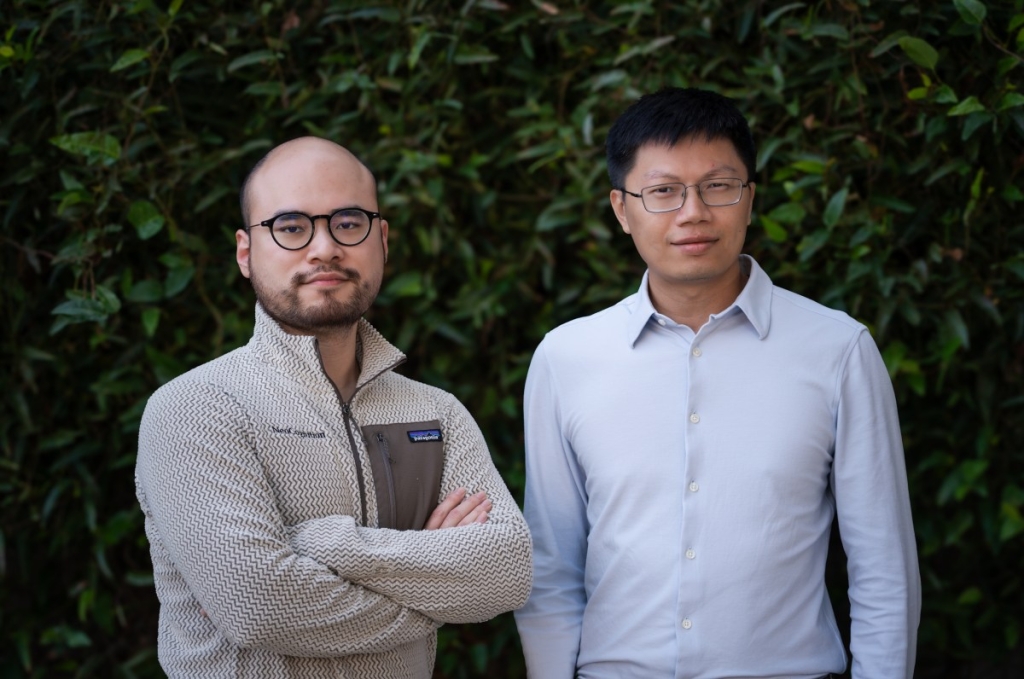
Silicon Valley investors are throwing money at AI researchers with one mission: create agents that don’t suck. The latest recipient of this aggressive courtship is Yu Su, an Ohio State professor who’s been running an AI agent lab while repeatedly saying “no thanks” to venture capitalists trying to lure him into the startup world.
That changed last year when Su finally saw the light—or more accurately, when he realized that advances in foundational models could finally make AI agents truly personalized and useful. He spun out his research into NeoCognition, a startup positioning itself as a research lab developing self-learning AI agents that might actually be worth the hype.
NeoCognition just emerged from stealth mode with a staggering $40 million in seed funding. The round was co-led by Cambium Capital and Walden Catalyst Ventures, with participation from Vista Equity Partners and a star-studded list of angels including Intel CEO Lip-Bu Tan and Databricks co-founder Ion Stoica. That’s not pocket change for a seed round—it’s a clear signal that investors believe Su might be onto something big.
“Today’s agents are generalists,” Su told TechCrunch, explaining the fundamental problem with current AI tools. “Every time you ask them to do a task, you take a leap of faith.” And that leap often ends in disappointment.
The numbers back him up. Whether you’re using Claude Code, OpenClaw, or Perplexity’s computer tools, these agents successfully complete tasks as intended only about 50% of the time, according to Su. That’s barely better than flipping a coin, which explains why your experience with AI agents probably involves more frustration than productivity gains.
The core issue is consistency—or rather, the lack thereof. Current agents are essentially digital interns who show up to work hungover half the time. They might nail a task perfectly one day and completely botch it the next, even when given identical instructions. This unreliability makes them impossible to trust as independent workers, which is exactly what everyone wants them to become.
NeoCognition’s solution is deceptively simple in concept but revolutionary in execution: build agents that can self-learn to become experts in any domain, just like humans do. Su argues that while human intelligence is broad, our real superpower is specialization. When we enter a new environment or profession, we rapidly master its unique rules, relationships, and consequences. We build mental models of how things work, and we update those models constantly based on new information.
“For humans, our continued learning process is essentially the process of building a world model for any profession, any environment,” Su explained. “We believe for agents to become experts, they need to learn autonomously to build a model of any given micro world.”
This capacity for rapid specialization is the critical missing link that could finally make AI agents reliable enough to work independently. While it’s technically possible to train agents for specific autonomous tasks, they currently require custom-engineering for each vertical. You can’t take an agent trained to handle customer service inquiries and expect it to manage your supply chain without significant retraining.
NeoCognition is different because it’s building agents that are generalists capable of self-learning and specializing in any domain. Think of it as creating digital employees who can be dropped into any department and figure out how to excel there, rather than hiring specialists for each role.
The startup plans to sell its agent systems primarily to enterprises, including established SaaS companies that can use them to build agent workers or enhance existing product offerings. This B2B approach makes sense given the enterprise-grade funding they’ve secured and the complexity of the technology.
The investment from Vista Equity Partners is particularly strategic. As one of the largest private equity firms in the software space, Vista can provide NeoCognition with direct access to a vast portfolio of companies looking to modernize their products with AI. It’s like having a built-in customer base of hundreds of potential enterprise clients who are already primed to adopt cutting-edge AI solutions.
Currently, NeoCognition employs about 15 people, the majority of whom hold PhDs. This isn’t a scrappy startup burning through venture capital—it’s a serious research operation staffed by some of the brightest minds in AI, which explains why they were able to command such a massive seed round.
The timing couldn’t be better. As companies across every industry race to integrate AI into their operations, they’re discovering that current agents are more liability than asset. A 50% success rate might be acceptable for experimental features, but it’s completely unacceptable for mission-critical business processes. NeoCognition is betting that the market is ready to pay premium prices for agents that actually work reliably.
If Su and his team can deliver on their promise, they won’t just have built better AI agents—they’ll have solved one of the most frustrating problems in modern technology. And with $40 million in backing from some of the smartest money in tech, they’ve got the runway to try.
Tags
AI agents, autonomous agents, self-learning AI, NeoCognition, Yu Su, venture capital, AI reliability, enterprise AI, AI specialization, machine learning, AI research, stealth startup, Cambium Capital, Walden Catalyst Ventures, Vista Equity Partners, AI consistency, AI agents 50% success rate, AI world models, AI experts, B2B AI, AI SaaS integration
Viral Sentences
The future of work isn’t humans vs. AI—it’s humans with AI agents that actually work. This $40M stealth startup might have solved the biggest problem in AI right now. Silicon Valley is betting big that AI agents will finally stop being digital interns who show up hungover. The 50% success rate of current AI agents is unacceptable—here’s how NeoCognition plans to fix it. PhDs are building the AI agents that could replace your entire customer service department. This Ohio State professor said no to VCs for years until he cracked the code on reliable AI agents. The secret to human intelligence isn’t breadth—it’s our ability to rapidly specialize, and now AI is learning to do the same. $40 million seed round for AI agents? Investors are screaming that this is the next big thing in enterprise tech. NeoCognition’s agents don’t just follow instructions—they build mental models of entire industries. The AI agent revolution is here, but only if someone can make them work consistently. This startup has Intel’s CEO and Databricks’ founder betting on their AI agents—should you be paying attention? Enterprise companies are desperate for AI that doesn’t require constant babysitting. The difference between good AI and great AI isn’t intelligence—it’s consistency and specialization. NeoCognition isn’t building another chatbot—they’re building digital employees that can learn any job.
,

Leave a Reply
Want to join the discussion?Feel free to contribute!