
Cardano’s Hoskinson says Bitcoin’s quantum fix can’t save Satoshi Nakamoto’s BTC
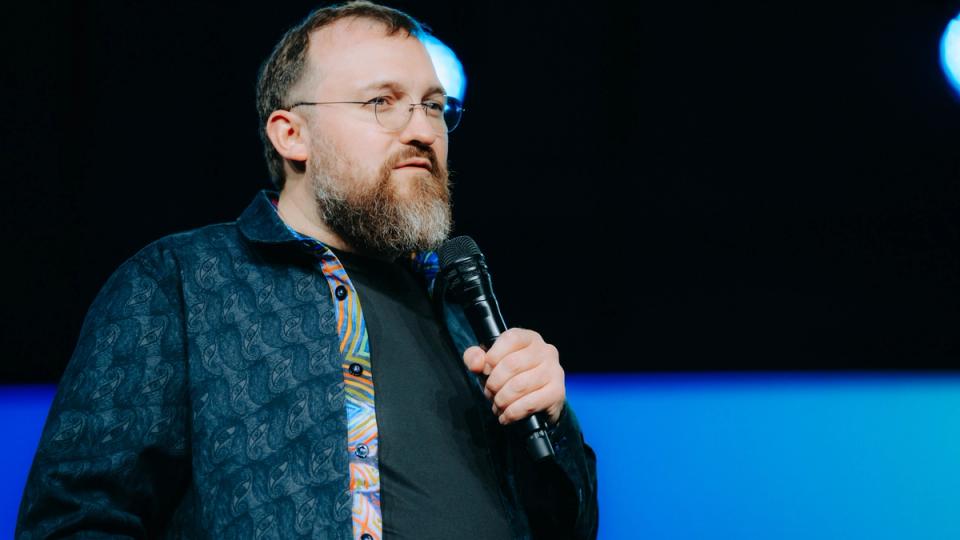
Bitcoin’s proposed quantum defense plan has ignited a fierce debate within the crypto community, with Cardano founder Charles Hoskinson delivering a scathing critique that questions both the technical soundness and the governance process behind the initiative. At the heart of the controversy is Bitcoin Improvement Proposal (BIP) 361, a plan designed to freeze 8 million bitcoin—about 40% of the total supply—if quantum computers ever become capable of breaking the network’s cryptographic security.
The proposal, spearheaded by Bitcoin developer Jameson Lopp and others, aims to protect the network from a future where quantum computers could potentially steal funds from wallets that use vulnerable cryptographic signatures. The idea is to implement a “quantum tripwire” that would trigger a freeze on these coins only if a quantum attack is proven. Affected users would then be able to reclaim their funds by providing a zero-knowledge proof tied to their BIP-39 seed phrase—a standard method for generating wallet keys from a recoverable phrase.
However, Hoskinson argues that the proposal is fundamentally flawed and mislabeled. In a detailed video posted to his YouTube channel, he contends that BIP-361 is being presented as a soft fork—a backward-compatible upgrade—when it would actually require a hard fork, a much more contentious and disruptive change. “To actually do this, you need a hard fork,” Hoskinson stated, emphasizing that the distinction is critical because Bitcoin’s development culture has historically resisted hard forks, viewing them as threats to the network’s immutability.
The controversy deepens when considering the fate of Bitcoin’s oldest and most valuable coins, including those believed to belong to Satoshi Nakamoto. Hoskinson points out that the recovery mechanism proposed in BIP-361—relying on BIP-39 seed phrases—cannot help approximately 1.7 million bitcoin that were mined before BIP-39 was introduced in 2013. These early coins, including the roughly 1 million bitcoin associated with Satoshi’s early mining activity, were generated using a different key derivation method from the original Bitcoin wallet software, which relied on a local key pool rather than a deterministic seed. “There is no seed phrase to prove knowledge of, which means no zero-knowledge recovery scheme built on that assumption can return access to the holders,” Hoskinson explained. “1.7 million coins can’t do that. It’s not possible. 1.1 million of which belong to Satoshi.”
If BIP-361 passes in its current form, these coins would remain permanently frozen, regardless of whether their original owners ever attempt to migrate. This has raised alarms about the potential for a significant portion of Bitcoin’s supply to become inaccessible forever, undermining the network’s core promise of decentralization and user control.
Jameson Lopp, the co-author of BIP-361, has responded to the criticism by acknowledging that he does not like the proposal and hopes it never needs to be adopted. He describes it as “a rough idea for a contingency plan” rather than a finalized specification. Lopp argues that freezing dormant coins—estimated at 5.6 million bitcoin—would be preferable to allowing a future quantum attacker to recover and dump them on the market, which could destabilize the entire ecosystem.
Hoskinson’s critique extends beyond the technical details to the broader issue of Bitcoin’s governance. He argues that the lack of formal on-chain governance leaves the network unable to resolve these complex tradeoffs through a structured process, forcing contentious upgrades to be negotiated through developer mailing lists and social pressure. This, he suggests, increases the risk of poorly conceived proposals being adopted without adequate scrutiny or community consensus.
The debate over BIP-361 highlights the growing tension within the Bitcoin community as it grapples with the dual challenges of preparing for future technological threats and preserving the network’s foundational principles. While the threat of quantum computing is real, the proposed solution raises difficult questions about accessibility, fairness, and the long-term viability of the world’s most valuable cryptocurrency.
As the crypto world watches closely, the outcome of this debate could have far-reaching implications—not just for Bitcoin, but for the entire blockchain ecosystem. Will the community rally behind a plan that could lock up billions of dollars in value forever, or will it seek alternative approaches that better balance security with accessibility? Only time will tell, but one thing is certain: the stakes have never been higher.
Tags & Viral Phrases:
Bitcoin #QuantumComputing #CryptoSecurity #BIP361 #SatoshiNakamoto #Cardano #CharlesHoskinson #BlockchainGovernance #CryptoDebate #HardFork #SoftFork #CryptoNews #BitcoinUpdate #QuantumThreat #CryptoControversy #BlockchainFuture #DigitalAssets #CryptoCommunity #TechInnovation #FutureOfMoney
,


Leave a Reply
Want to join the discussion?Feel free to contribute!