
Google Home Problems After Gemini Update
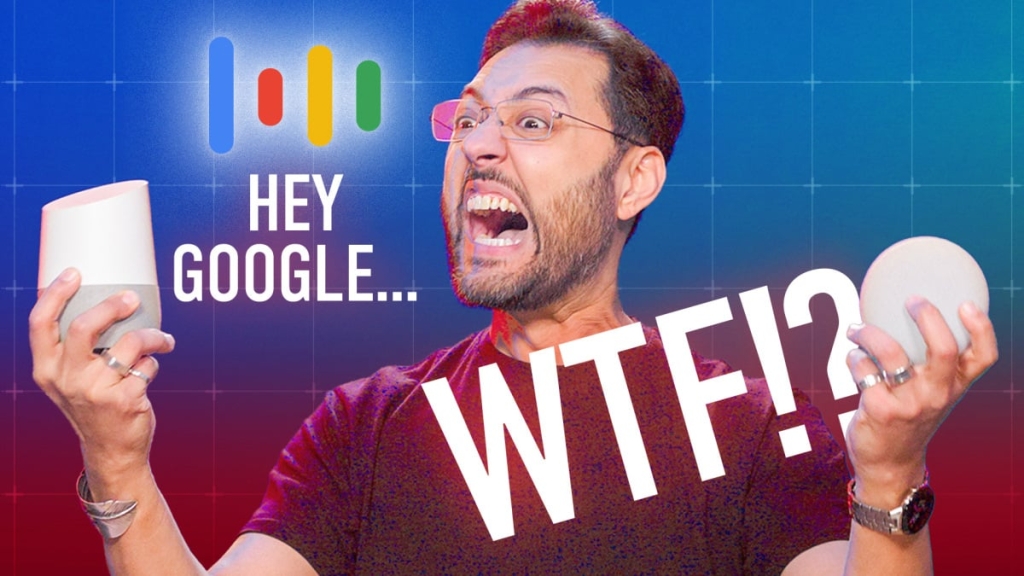
Google’s Smart Home Dream Crumbles: What Went Wrong?
Google’s ambitious smart home ecosystem, once hailed as the future of connected living, appears to be unraveling at an alarming pace. What was once positioned as a seamless integration of devices, voice assistants, and automation has now become a cautionary tale of overreach, mismanagement, and consumer frustration. As competitors like Amazon and Apple continue to refine their offerings, Google’s smart home division seems to be losing ground—and fast.
The Rise and Fall of Google’s Smart Home Vision
When Google acquired Nest in 2014 for $3.2 billion, it signaled the tech giant’s serious intent to dominate the smart home market. Nest’s innovative thermostats, cameras, and smoke detectors, combined with Google’s AI prowess and cloud infrastructure, promised a future where homes would be smarter, safer, and more energy-efficient. The introduction of Google Assistant in 2016 further cemented this vision, offering a unified voice interface to control an expanding ecosystem of devices.
For a time, it seemed like Google was on the right track. The company expanded its lineup with products like the Google Home speaker, Nest Hub smart displays, and a growing array of third-party integrations through the Works with Google Assistant program. By 2020, Google’s smart home ecosystem was one of the most comprehensive on the market, with millions of users relying on it for everything from adjusting their thermostats to streaming music.
But cracks began to show. Frequent software updates often broke device functionality, leaving users frustrated and scrambling for fixes. The once-reliable Google Assistant became sluggish and unresponsive, with voice commands failing to execute or producing incorrect results. Meanwhile, Google’s hardware division faced internal turmoil, with key executives leaving and product roadmaps becoming increasingly unclear.
The Current State of Disarray
Fast forward to 2026, and the situation has deteriorated significantly. Users report widespread issues with device compatibility, with newer Google products failing to work seamlessly with older ones. The much-touted Matter standard, intended to unify smart home devices across platforms, has seen limited adoption within Google’s ecosystem, leaving many devices siloed and incompatible.
Google’s smart home app, once a central hub for controlling devices, has become a source of frustration. Users complain of frequent crashes, slow loading times, and a confusing interface that makes simple tasks unnecessarily complicated. The company’s decision to merge the Nest and Google Home apps in 2022, while intended to streamline the user experience, has instead created a bloated and unwieldy platform that fails to meet the needs of either Nest or Google Home users.
Hardware issues have also plagued the ecosystem. The latest Nest Cam models have been criticized for poor video quality, unreliable motion detection, and short battery life. The Google Nest Hub Max, once a flagship product, has seen its price slashed as demand wanes. Meanwhile, third-party manufacturers, once eager to integrate with Google’s platform, are now prioritizing Amazon Alexa and Apple HomeKit due to their more stable and user-friendly ecosystems.
The Competition Closes In
While Google struggles, its competitors are thriving. Amazon’s Alexa ecosystem continues to grow, with a wide range of affordable and reliable devices that appeal to mainstream consumers. Apple’s HomeKit, though more limited in scope, is praised for its security and ease of use, particularly among iPhone users. Even smaller players like Samsung’s SmartThings and Hubitat are gaining traction by offering more customizable and reliable solutions.
Google’s missteps have not gone unnoticed by industry analysts. “Google’s smart home strategy has been plagued by a lack of focus and consistency,” says tech analyst Sarah Chen. “The company seems to be spreading itself too thin, trying to compete in too many areas without mastering any of them. As a result, consumers are losing faith in the brand.”
What’s Next for Google’s Smart Home Division?
The big question now is whether Google can turn things around. The company has announced plans to revamp its smart home strategy, including a renewed focus on AI-driven automation and a commitment to improving device compatibility. However, skeptics argue that these promises ring hollow without concrete action.
One potential bright spot is Google’s investment in generative AI, which could revolutionize how users interact with their smart homes. Imagine a future where Google Assistant can anticipate your needs, automate complex routines, and even troubleshoot issues without user intervention. But for now, this remains a distant possibility, and Google’s smart home users are left waiting for tangible improvements.
Conclusion
Google’s smart home ecosystem, once a beacon of innovation, now finds itself at a crossroads. The company’s failure to deliver a reliable, user-friendly experience has eroded consumer trust and allowed competitors to gain ground. Unless Google can address its systemic issues and refocus its efforts, it risks becoming a footnote in the history of smart home technology.
For now, the future of Google’s smart home dream remains uncertain. Will the tech giant rise to the challenge and reclaim its position as a leader in connected living, or will it continue to falter, leaving users to seek alternatives? Only time will tell.
Tags & Viral Phrases
Google smart home failure, Nest ecosystem collapse, Google Assistant problems 2026, smart home tech disaster, Google vs Amazon Alexa, Apple HomeKit dominance, Matter standard issues, Google hardware missteps, smart home app crashes, Nest Cam failures, Google smart home strategy, AI-driven home automation, Google smart home revival, tech industry blunders, connected home chaos, Google losing smart home war, smart home user frustration, Google smart home news, tech giant missteps, future of smart homes.
,


Leave a Reply
Want to join the discussion?Feel free to contribute!