
NASA Shuts Off Instrument on Voyager 1 to Keep Spacecraft Operating
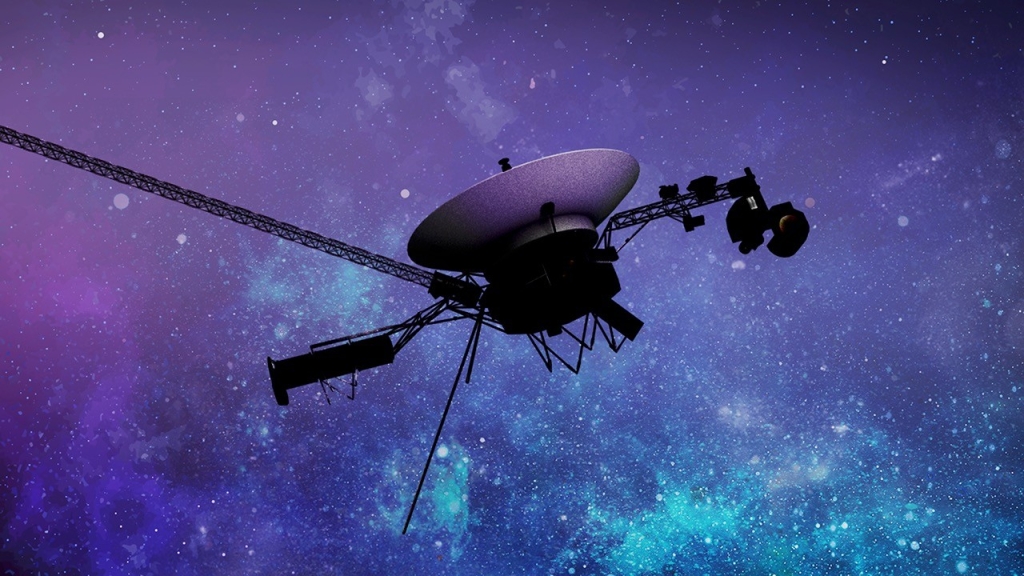
NASA Shuts Down Voyager 1’s LECP Instrument to Keep Historic Spacecraft Alive
In a bittersweet move that underscores the fragility of one of humanity’s most ambitious space missions, NASA engineers have powered down a critical science instrument aboard Voyager 1 — the spacecraft that first crossed into interstellar space and remains the most distant human-made object from Earth.
On April 17, 2026, the team at NASA’s Jet Propulsion Laboratory in Southern California transmitted commands to deactivate the Low-energy Charged Particles (LECP) experiment, a sophisticated sensor that has been continuously gathering data since Voyager 1 launched in 1977. The decision wasn’t made lightly, but it was necessary: the legendary probe is running dangerously low on power as it continues its lonely journey through the vast emptiness between stars.
Voyager 1’s LECP instrument has been a scientific workhorse for nearly five decades, measuring charged particles including ions, electrons, and cosmic rays from both our solar system and the broader galaxy. This data has been instrumental in helping scientists understand the structure of the interstellar medium — the matter and radiation that exists in the space between star systems. The instrument detected pressure fronts and regions of varying particle density beyond our heliosphere, the protective bubble created by the Sun’s solar wind.
What makes Voyager’s continued operation remarkable is its power source. Unlike most spacecraft that rely on solar panels, both Voyager probes use radioisotope thermoelectric generators (RTGs) — devices that convert heat from decaying plutonium into electricity. This technology was essential for a mission designed to travel to the outer planets and beyond, where sunlight is too faint to be useful. However, as the plutonium decays, the power output steadily decreases. Each year, the Voyagers lose approximately 4 watts of power, and after almost 50 years in space, those margins have become razor-thin.
The decision to shut down the LECP came during a moment of crisis. On February 27, 2026, during a routine planned roll maneuver, Voyager 1’s power levels dropped unexpectedly. The engineering team recognized that any further decline could trigger the spacecraft’s undervoltage fault protection system — a safety mechanism that would automatically shut down components to protect the probe. While this would save the spacecraft, recovery would require extensive communication with the distant probe and carry significant risks.
“We’re in a situation where we have to make difficult choices to preserve the mission,” explained Kareem Badaruddin, Voyager mission manager at JPL. “While shutting down a science instrument is not anybody’s preference, it is the best option available. Voyager 1 still has two remaining operating science instruments — one that listens to plasma waves and one that measures magnetic fields. They are still working great, sending back data from a region of space no other human-made craft has ever explored. The team remains focused on keeping both Voyagers going for as long as possible.”
The choice of which instrument to turn off wasn’t made impulsively. Years ago, Voyager’s science and engineering teams collaborated to create a prioritized list of which components to shut down while maximizing the mission’s scientific return. Of the ten identical sets of instruments carried by each spacecraft, seven have now been powered down across both probes. For Voyager 1, the LECP was next in line, following the shutdown of Voyager 2’s LECP in March 2025.
The sheer distance involved in communicating with Voyager 1 adds another layer of complexity to every decision. At more than 15 billion miles (25 billion kilometers) from Earth, commands take approximately 23 hours to reach the spacecraft. The shutdown process itself requires about three hours and 15 minutes to complete. In a small concession to future possibilities, engineers chose to keep a tiny motor running within the LECP — the component that spins the sensor to scan in all directions. This motor consumes minimal power (just 0.5 watts), but keeping it operational provides the best chance of potentially reactivating the instrument if additional power becomes available.
NASA engineers estimate that shutting down the LECP will provide Voyager 1 with approximately one additional year of operational life under current conditions. However, the team isn’t stopping there. They’re developing an ambitious energy-saving solution called “the Big Bang” — a comprehensive plan to swap out multiple powered devices simultaneously, turning some off while replacing others with lower-power alternatives to maintain the spacecraft’s critical thermal systems.
The Big Bang will be tested first on Voyager 2, which has slightly more power to spare and is closer to Earth, making it the safer test subject. If the trials scheduled for May and June 2026 prove successful, the team plans to implement the same fix on Voyager 1 no sooner than July 2026. This more aggressive power management strategy could potentially extend both spacecraft’s operational lifetimes by several additional years and might even allow for the LECP’s reactivation.
The Voyager mission represents one of humanity’s greatest exploratory achievements. Launched during the disco era, these probes completed the “Grand Tour” of the outer planets — with Voyager 1 flying by Jupiter and Saturn, and Voyager 2 visiting all four gas giants. Both spacecraft then continued outward, with Voyager 1 crossing into interstellar space in 2012 and Voyager 2 following in 2018. They carry Golden Records — messages in a bottle intended for any extraterrestrial intelligence that might one day encounter them.
As these aging explorers continue their silent drift through the Milky Way, each decision about their operation carries the weight of history. The instruments may be failing, but the legacy of the Voyager mission — our first steps as a species into the interstellar ocean — will endure forever.
Tags: Voyager 1, interstellar space, NASA, JPL, radioisotope thermoelectric generator, LECP, space exploration, spacecraft power management, Golden Record, heliosphere, cosmic rays, plasma waves, magnetic fields, Big Bang power solution, 1977 launch, interstellar medium, spacecraft engineering, space science, NASA mission, deep space communication
Viral phrases: Humanity’s farthest spacecraft, 47-year-old space probe, interstellar ocean, Golden Record time capsule, plutonium-powered spacecraft, spacecraft on life support, NASA’s most distant explorer, silent drift through Milky Way, disco-era spacecraft still exploring, space mission that redefined human achievement, engineering against the odds, messages to the stars, last days of a legend, cosmic messages in a bottle, spacecraft that will outlive humanity, silent ambassadors to the cosmos, engineering marvel of the 20th century, humanity’s first interstellar messengers, spacecraft running on fumes, NASA’s bold power-saving gamble, the loneliness of deep space, spacecraft that witnessed the solar system’s edge, engineering decisions that echo through time, humanity’s most ambitious message to the universe
,

Leave a Reply
Want to join the discussion?Feel free to contribute!