
Scientists Captured Light in a Trap 2,000 Times Thinner Than a Human Hair : ScienceAlert
Trapping Light in an Atomic Lattice: A Quantum Leap for Future Photonics
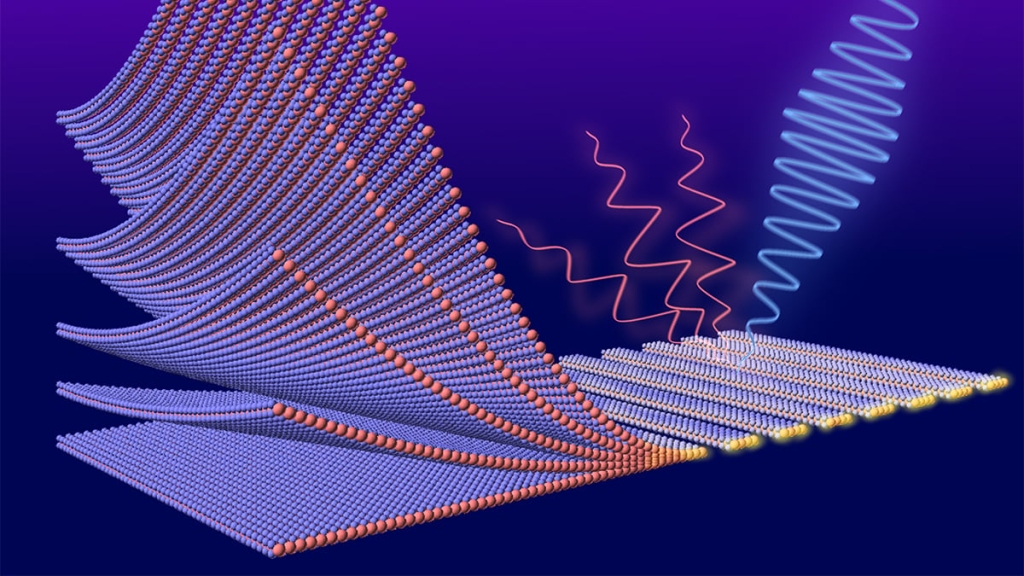
In a breakthrough that sounds more like science fiction than reality, physicists have successfully trapped beams of infrared light inside a lattice of specially engineered atoms—just 42 nanometers thick. To put that in perspective, that’s roughly 2,000 times thinner than a human hair or even less than a sliver of a standard sheet of paper. This stunning feat, achieved by a team from the University of Warsaw in Poland, opens the door to a new era of ultra-compact, light-based electronics and quantum photonics.
The implications of this discovery are profound. As technology components shrink and demand for precision grows, being able to trap and manipulate light at the nanoscale is a game-changer. Infrared light, with its longer wavelengths compared to visible light, poses unique challenges for confinement. But this team has cracked the code, leveraging cutting-edge materials and quantum physics to push the boundaries of what’s possible.
The key to their success lies in the material used for the grating that holds the light in place: a meticulously crafted lattice of molybdenum and selenium atoms, forming an ultra-thin molybdenum diselenide (MoSe₂) structure. This material is renowned for its exceptionally high refractive index—its ability to bend and slow down light—making it ideal for trapping photons. However, reliably manufacturing MoSe₂ at such minuscule scales has long been a stumbling block in the field.
To overcome this, the researchers employed a sophisticated technique called molecular beam epitaxy (MBE), an atomic-scale “printing” method that allows for the precise growth of ultra-thin sheets. But they didn’t stop there. They also carved microscopic subwavelength stripes into the MoSe₂ sheets—gaps smaller than the wavelength of infrared light—creating a perfect trap for photons.
The real magic, however, comes from a quantum phenomenon known as a “bound state in the continuum” (BIC). In simple terms, a BIC allows light waves to be confined within a material, even as they coexist with other waves that would normally radiate away. Achieving this required not only the right material but also precise engineering and modeling to ensure the MoSe₂ grating was configured perfectly.
“We exploited the exceptionally high refractive index of MoSe₂ to innovatively design and produce MoSe₂-based subwavelength gratings hosting BICs,” the researchers wrote in their paper, published in ACS Nano.
This breakthrough has far-reaching implications, particularly for the field of optical computing. Unlike traditional electronics, which rely on electrons, optical computing uses photons of light to process information. This could lead to devices that are not only faster but also smaller and more energy-efficient. While significant hurdles remain before optical computing becomes a reality, this experiment demonstrates that trapping and manipulating light with the necessary precision is within reach.
Of course, the journey from lab to real-world application is rarely straightforward. The team’s sheet-growing process, while groundbreaking, wasn’t perfect. To address inconsistencies, they polished the material with silk tissues—a surprisingly low-tech solution for such high-tech science. But the researchers are optimistic that their approach can be refined and even expanded to other materials.
MoSe₂ is part of a larger family of ultra-thin materials known as transition metal dichalcogenides (TMDs), which hold immense promise for future technologies. The hope is that new methods can be developed to produce and manipulate TMDs more reliably, paving the way for gadgets that are even smaller, faster, and more powerful than anything we have today.
As the researchers noted, “The ease and simplicity of processing MoSe₂ confirm that other designs of photonic structures, such as 2D metasurfaces based on TMD layers, are feasible.” This suggests that the potential applications of this discovery extend far beyond the lab, hinting at a future where light-based technologies are woven into the fabric of everyday life.
In a world where the limits of physics are constantly being tested, this achievement stands as a testament to human ingenuity and the relentless pursuit of knowledge. By trapping light in an atomic lattice, scientists have not only pushed the boundaries of what’s possible but also illuminated a path toward a future where the smallest scales hold the biggest potential.
Tags: quantum physics, infrared light, nanotechnology, optical computing, molybdenum diselenide, photonics, bound state in the continuum, molecular beam epitaxy, ultra-thin materials, transition metal dichalcogenides, light manipulation, nanoscale engineering, future tech, scientific breakthrough, University of Warsaw
Viral Sentences:
- “Trapping light in a lattice thinner than a human hair—this is the future of photonics!”
- “Quantum physics just got a whole lot cooler with this light-trapping breakthrough!”
- “From lab to life: How trapping light could revolutionize your gadgets!”
- “The smallest scales, the biggest potential—welcome to the era of ultra-compact tech!”
- “Silk tissues and atomic lattices? This is science at its most unexpected!”
- “Optical computing is no longer a dream—it’s a light-trapping reality!”
- “42 nanometers of genius: How scientists are rewriting the rules of light!”
- “The future is flat, ultracompact, and powered by light—thanks to this discovery!”
- “Bound states in the continuum: The quantum trick that’s changing everything!”
- “From molybdenum to magic: The material that’s trapping light like never before!”
,


Leave a Reply
Want to join the discussion?Feel free to contribute!