
Tim Cook’s Legacy Is Turning Apple Into a Subscription
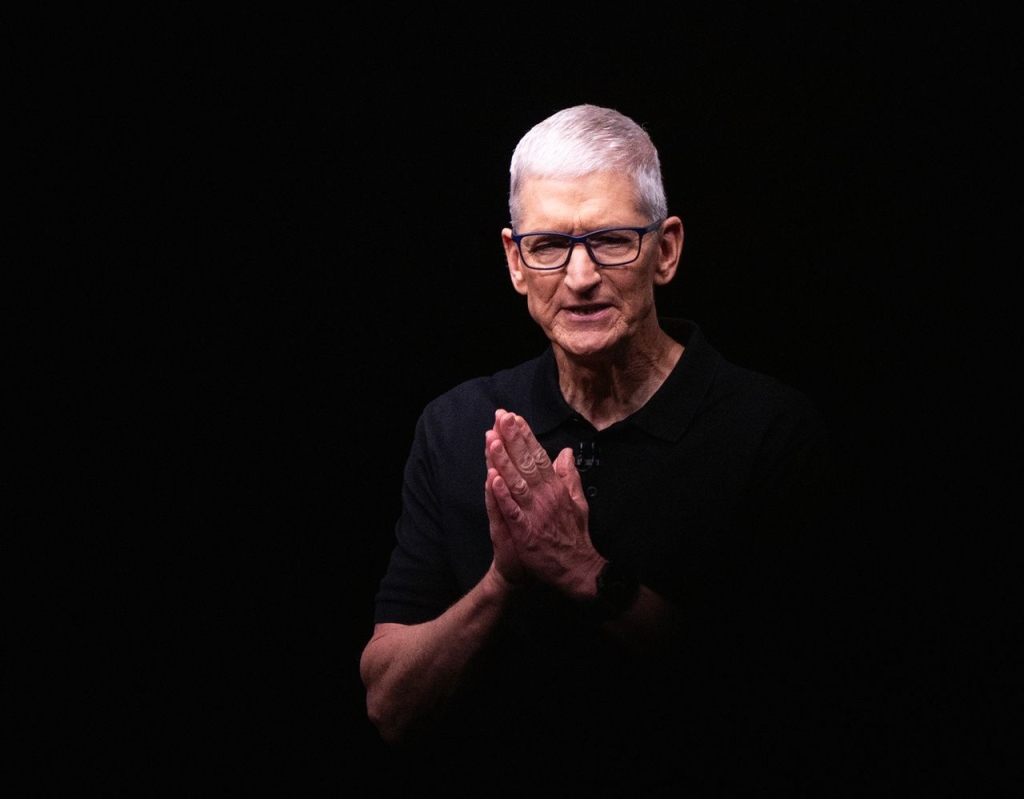
Apple’s Services Empire: How Tim Cook Doubled Down on Subscriptions Before Stepping Down
When Tim Cook announced his departure as Apple CEO effective September 1, the tech world immediately began analyzing his legacy. While his tenure will undoubtedly be remembered for operational excellence and shepherding Apple into its trillion-dollar era, his most transformative achievement might be the company’s evolution from a hardware powerhouse into one of the world’s most formidable platform companies through services.
During Apple’s most recent earnings report for the quarter ending December 2025, the services business hit an all-time revenue record of $30 billion—a staggering 14 percent increase year-over-year. To put that in perspective, services alone generated more revenue than Mac, iPad, Apple Watch, Home, and other accessories combined. For the entire fiscal year 2025, Apple’s services generated over $109 billion, marking another 14 percent growth from 2024.
The foundation for this services empire was laid before Cook’s tenure, with the App Store launching in 2008—just a year after Steve Jobs unveiled the iPhone. Jobs’ visionary decision to charge up to a 30 percent “tax” on paid apps and in-app purchases created the economic engine that would power Apple’s services growth for years to come. Phil Schiller and Eddy Cue were the architects behind this strategy, with Schiller later making headlines in 2016 when he famously adjusted the developer tax to address mounting complaints about Apple squeezing developers.
When Cook first took over as CEO in 2011, “services” weren’t even broken out as a separate revenue category, though iTunes was already generating around $6 billion annually. Under his leadership, Apple transformed into a platform company where services became the subscription layer on top of iOS, with apps like iCloud, Apple Music, Apple TV+, and News+ tightly integrated with Messages—the glue that keeps users locked into the Apple ecosystem.
The transition wasn’t just about adding new revenue streams; it was about creating platform lock-in. As Thompson notes, almost all service apps are deeply integrated with Messages, making it increasingly difficult for users to switch to Android devices. This strategic brilliance has kept millions of users “stuck to their iPhones,” as The Verge aptly described the phenomenon.
Now, as John Ternus prepares to take the helm, he faces perhaps Apple’s greatest challenge yet: navigating the generative AI era. Ternus brings impressive hardware credentials to the role, having served as Apple’s senior vice president of hardware engineering since 2021 and joining the company’s product design team way back in 2001. He’s the executive who led the Mac transition from x86 (Intel) to ARM (Apple Silicon)—a “system- and platform-level transition, essentially a brain transplant” that required “a very high level of execution and tight cross-functional coordination,” according to Ming-Chi Kuo, the famed Apple analyst.
This hardware expertise is particularly relevant as Apple prepares for the AI device era. Without Ternus’ leadership on the silicon transition, Apple wouldn’t have the hardware position it has now. However, the company’s approach to advanced AI has been, at best, perplexing. Apple Intelligence, announced in 2024 as the new moniker for AI features embedded in products like Siri, has faced significant challenges. The company postponed the release of an AI-enhanced Siri in 2025, and key AI executives began exiting—Robby Walker left in October, followed by John Giannandrea, Apple’s head of AI, in late 2025.
Following Giannandrea’s departure, Craig Federighi reportedly took charge of Siri, suggesting Apple is still figuring out its AI strategy. The question now is whether Ternus, a hardware executive, can successfully guide Apple through the complex landscape of LLMs, inference learning, Siri-as-a-chatbot, hallucinations, AI privacy implications, and vibe coding.
Cook’s legacy is clear: he transformed Apple from the world’s most popular consumer hardware company into one of the world’s most powerful platform companies. The services business he championed now generates more revenue than most Fortune 500 companies do in total. As Ternus steps up, he inherits not just a hardware empire but a services juggernaut that has fundamentally changed how Apple makes money and keeps users engaged.
The next chapter will test whether Apple’s platform strength in services can translate into AI dominance, or whether the company will need to bring in new leadership with different expertise to compete in the rapidly evolving AI landscape. One thing is certain: the platform that Cook built through services will be central to whatever Apple does next.
#AppleServices #TimCookLegacy #AppleIntelligence #JohnTernus #AppStoreTax #AppleSilicon #SiriAI #PlatformCompany #TechLeadership #GenerativeAI #AppleEarnings #ServicesBusiness #iPhoneEcosystem #HardwareToSoftware #TechTransition
Apple’s services revenue hits $30B quarterly
Tim Cook doubles down on subscriptions
John Ternus takes over Apple CEO role
Apple Intelligence faces delays and departures
App Store tax controversy continues
Mac transition to Apple Silicon complete
Siri struggles with AI competition
Services now bigger than Mac and iPad combined
Apple platform lock-in strategy
Generative AI challenges for Apple
Hardware exec leads software transition
Apple services growth 14% year-over-year
iPhone ecosystem stickiness
Apple AI strategy questioned
Platform company evolution complete,


Leave a Reply
Want to join the discussion?Feel free to contribute!